How We Looked for an Old House in Kyoto
 tsujikenzai
How We Looked for a House After Deciding to Buy One
What we chose not to do, and the conditions we set from the beginning
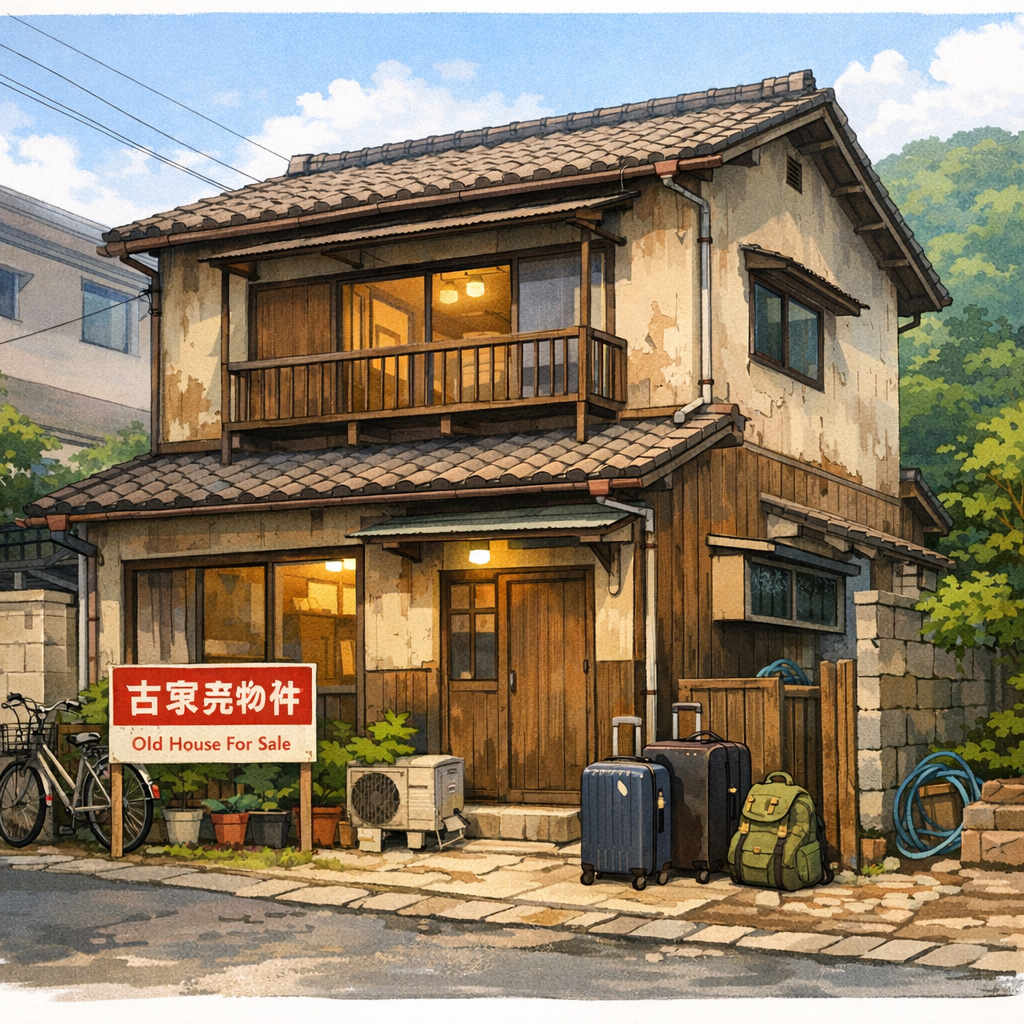
After deciding to purchase a house, the next big question was how to search for one.
In this article, I will explain:
- What we intentionally chose not to do when searching
- The conditions we decided on before looking at any properties
1. What We Chose Not to Do When Searching
— Why we did not rely only on property portal websites
There are many ways to search for a house in Japan. However, one thing I decided not to do this time was to rely mainly on large portal websites such as SUUMO.
These portals contain a wide range of listings, from newly posted properties to ones that have been on the market for six months or even over a year. In many cases, these are properties that have remained on the market for some time.
While there are exceptions, properties with truly good conditions often move very quickly.
That said, I want to be clear: using portal websites is not a bad thing.
Most listings are designed for people looking for a home to live in. For that purpose, these platforms are extremely useful.
However, when your goal is:
- Investment
- Renovating a vacant house
- Or converting a property into a share house, as in our case
A property that has remained on the market for a longer period can sometimes match these goals surprisingly well.
2. The Search Method We Chose
— Working with an independent agent and using REINS
This was my first time purchasing a house.
Fortunately, I know an independent real estate agent, so I asked them to help with the search.
Licensed agents in Japan can access REINS, a professional-only property database that is not available to the general public.
For this first purchase, I chose this approach as a way of gaining experience as well.
3. The Conditions We Set from the Beginning
— Price, zoning, and size
Price: Under 10 million yen
Our first condition was a purchase price of under 10 million yen.
We wanted to start on a small scale, and as a construction company, our strategy was to add value through renovation.
By keeping the purchase price low, we could invest more into improving the building itself.
Why a Share House Instead of a Standard Rental House
Next, we considered how the property would be used.
Standard single-family rental houses often offer limited profitability. Their main competitors are condominiums and the general rental market.
Here, I developed what I call the idea of a “rent ceiling.”
In Kyoto, I believe there is an upper limit to how much rent an average household is willing to pay. Once rent exceeds that level, many families begin to consider buying a home or a condominium instead, as it contributes to long-term asset building.
For this reason, using an old house as a standard rental property did not seem attractive. This led us to focus on properties suitable for a share house.
4. Another Reason We Chose a Share House
— Personal experience
When I was a student, I stayed in Barcelona, Spain for about three weeks.
Because hotels were expensive, I lived in a shared apartment, roughly the size of a three-bedroom unit.
My roommates were an American and a woman from Poland.
While share houses are not yet common in Japan, I felt that a city like Kyoto—visited by many tourists and international students—would have strong demand.
5. Thinking About Marketing from the Start
— Differentiation from monthly apartments and licensing
When planning a share house, marketing was another critical factor.
Even a well-designed property has no value if people cannot find it.
Furnished medium- to long-term rental properties, often called “monthly apartments,” already exist all over Japan.
Many of them are reasonably priced, so differentiation is essential.
One issue is that monthly apartments usually require contracts with local real estate companies or owners, which can be a hurdle for foreign visitors and students.
We believed that listing a share house on platforms such as Airbnb or Booking.com, where payment and contracts are simple, would clearly differentiate it.
However, these platforms require proper licensing, and zoning regulations may prohibit lodging activities in some areas. Discovering this after purchase would be too late, so zoning was carefully checked from the beginning.
6. Our Final Conditions
- Under 10 million yen
- Zoning that allows lodging licenses such as minpaku
- A large layout suitable for creating multiple bedrooms for a share house
The renovation of this house is currently in progress. You can see the ongoing renovation work and discoveries here:
▶ Big Discovery in a Vacant House – Akiya Under Renovation
In the next article, I will write about what we actually check during on-site inspections.