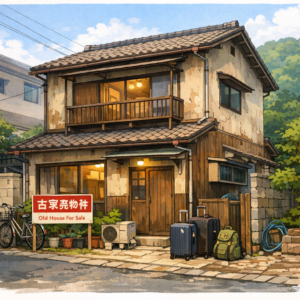
The Reality of Old Kyoto Houses & Roof Renovation Costs
 tsujikenzai
The Reality of Old Kyoto Houses & Roof Renovation Costs | Tsuji House
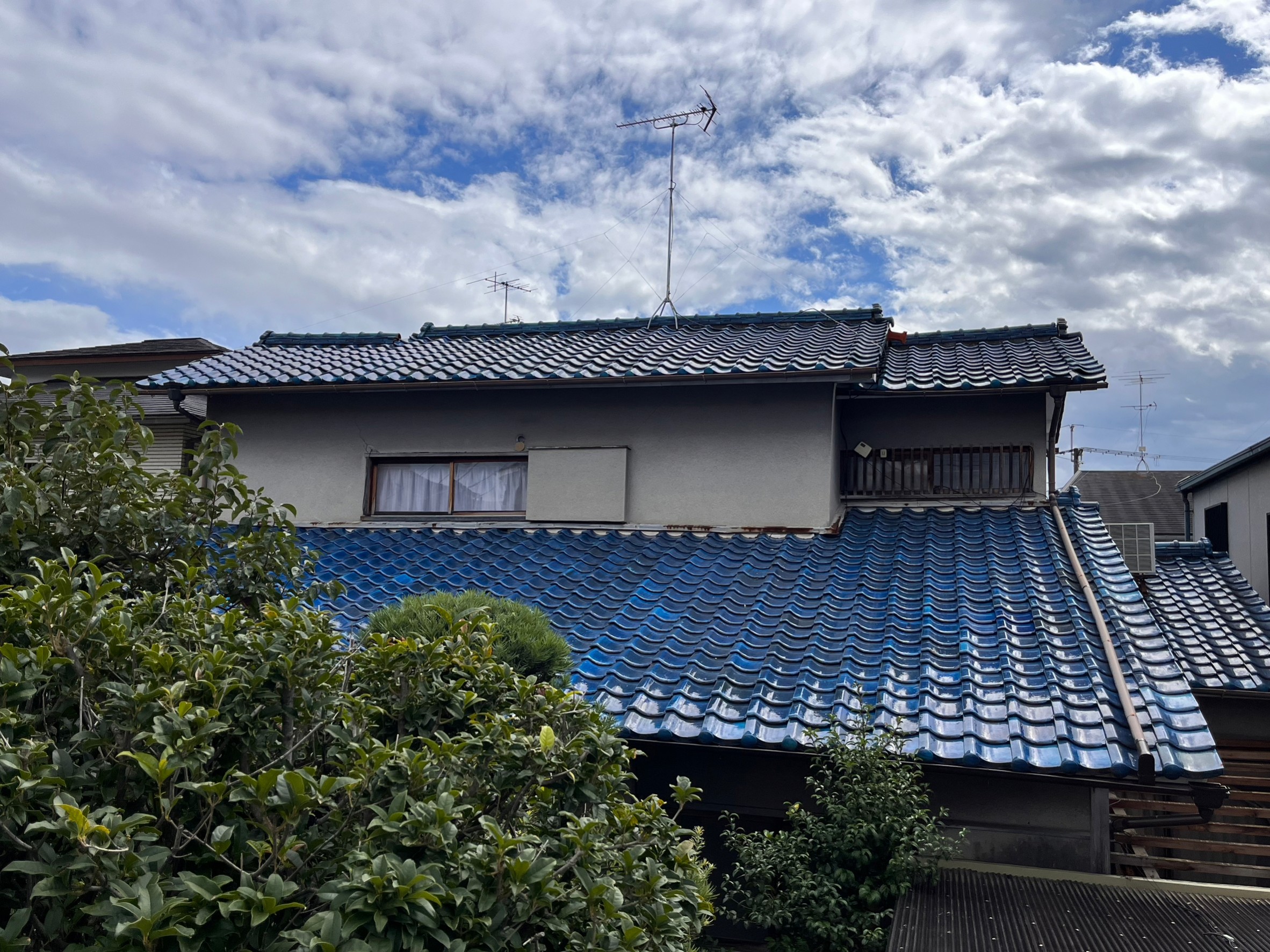
Kyoto is full of beautiful traditional homes—especially machiya and other older residences that blend perfectly with the city’s historic streetscape. But in many cases, the roof is the most important hidden risk. Even when it looks fine from the street, deterioration may already be progressing underneath.
1. The Problem with Old Kyoto Homes: Old Roofs
Many older Kyoto homes use traditional Japanese tile roofing. In the past, a common method was the clay-set tile roof, where tiles were fixed using soil/clay under the tiles (often called a “clay bedding” method).
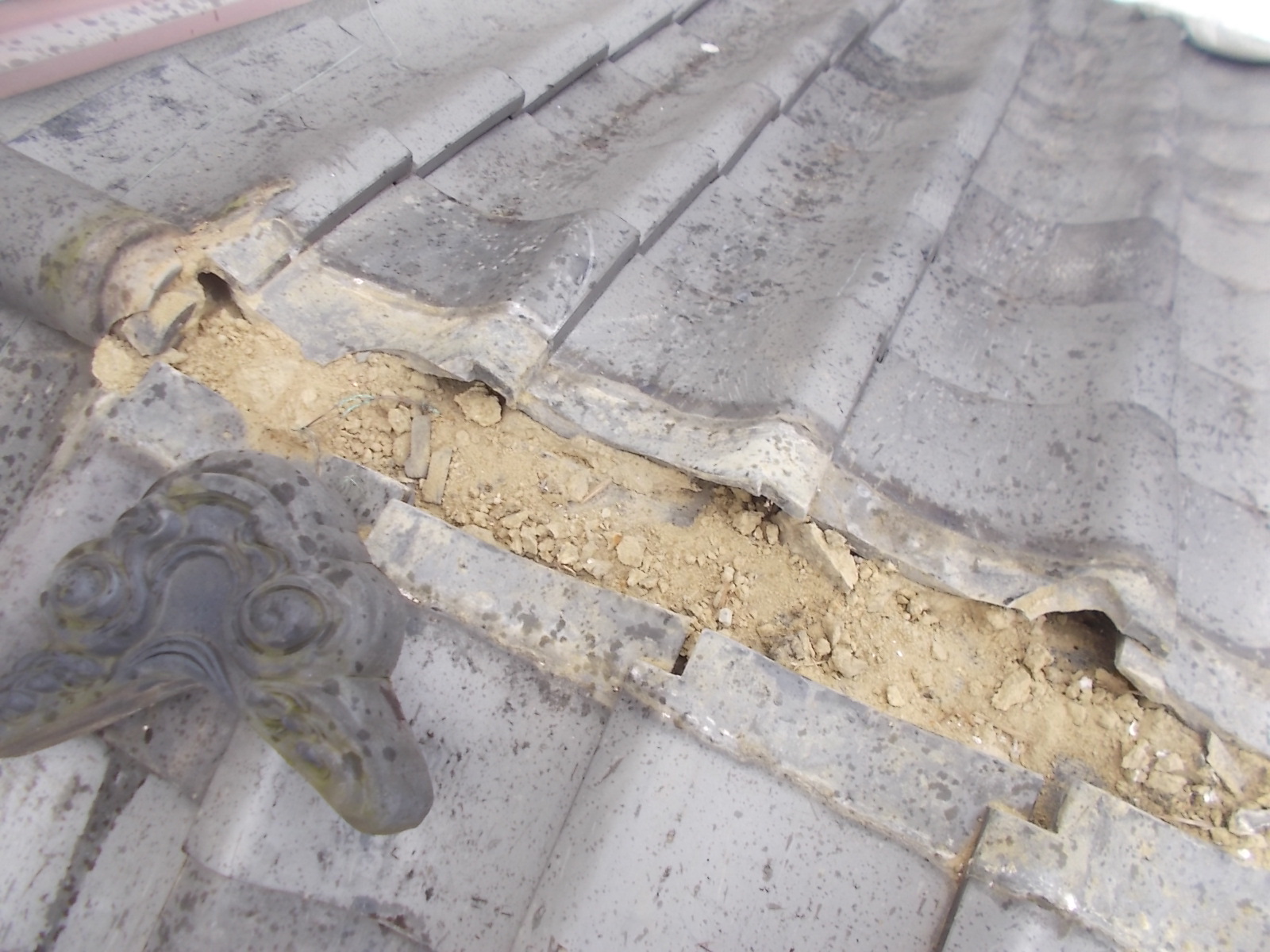
Over decades, that clay can deteriorate and wash out. When it does, the roof’s waterproof performance drops—and roof leaks become much more likely.
Key point: One of the defining characteristics of older Kyoto roofs is that they can look clean on the outside, while deterioration silently progresses inside.
2. Roof Repairs Can Cost More Than the House
In Kyoto, a wide range of older properties are listed for sale. Some are very affordable—especially non-rebuildable properties (再建築不可), which can appear attractive from a price standpoint.
However, depending on roof condition, the cost of repairs can exceed the purchase price of the building itself.
A real-world example:
- Building price: ¥1,500,000
- Full roof replacement: ¥2,000,000
In Kyoto, it’s not rare to hear: “I thought I bought a cheap property—but the roof work became a major expense.”
3. You Can’t Judge a Roof from the Ground
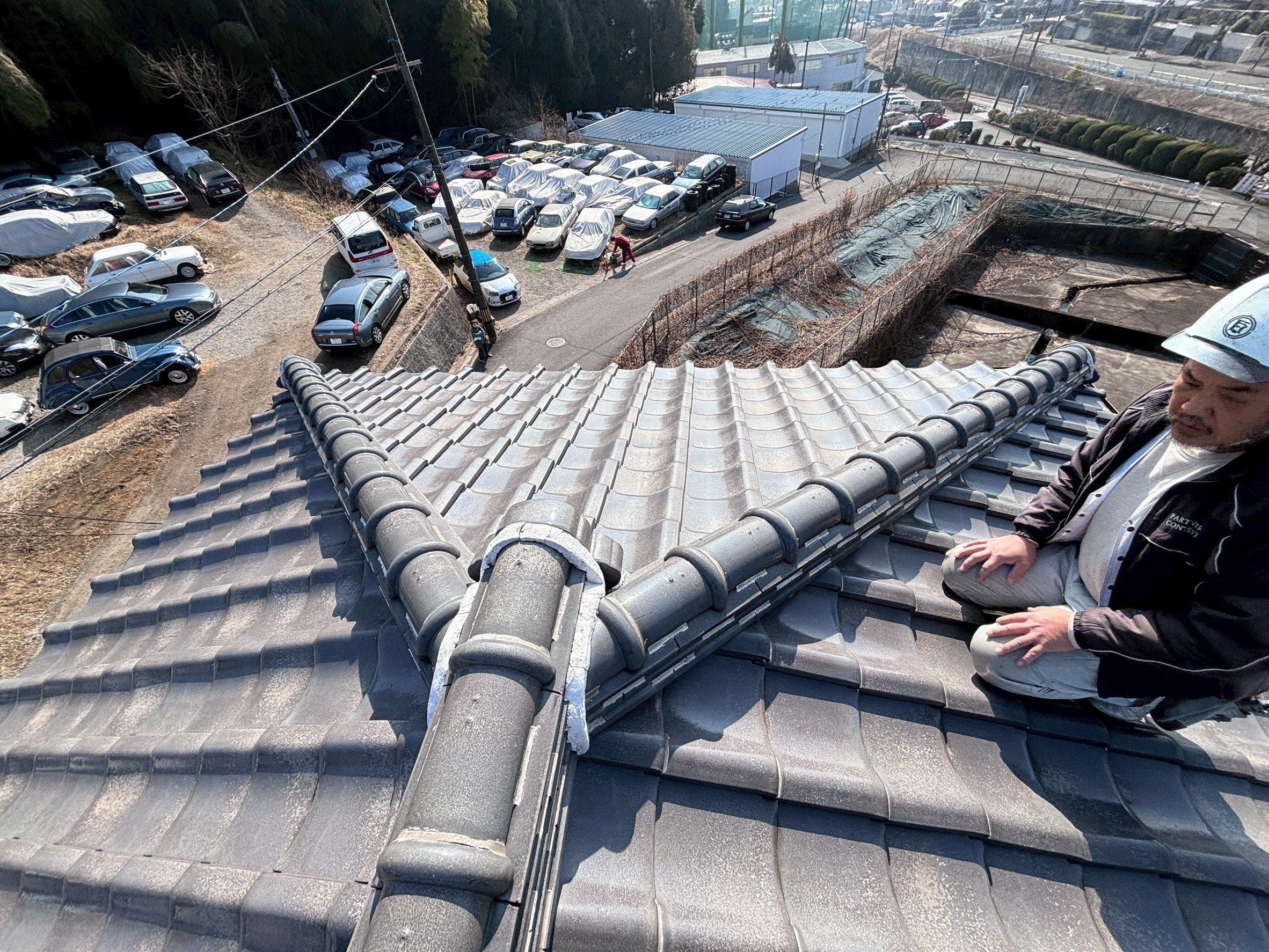
Roof condition cannot be accurately evaluated from street level. A proper diagnosis usually requires climbing up with a ladder and checking:
- Broken or shifted tiles
- Waterproof underlayment deterioration
- Rotting or weakened roof substrate
Roof conditions generally fall into two categories:
- Localized repairs (partial tile repair, small waterproofing fixes)
- Full replacement (complete re-roofing / switching to a different roofing system)
We’ve inspected leaking roofs where a full renovation was assumed—but the issue was resolved with targeted partial repairs. With an accurate diagnosis, it’s sometimes possible to avoid unnecessary large-scale work.
4. What’s Typically Included in a Roof Renovation Estimate
Roof estimates commonly include the following items:
① Scaffolding
To work safely on a roof, scaffolding is usually required. Specialized scaffold crews transport materials by truck and assemble on site. Larger projects are often priced per square meter, while smaller jobs may be quoted as a lump-sum “scaffolding set.”
② The Roofing Work Itself
Costs vary significantly depending on the scope:
- Partial tile repair: roofer labor + materials
- Switching from tile to metal roofing: tile removal + metal roofing installation + materials
Full replacement tends to be the most expensive option because demolition and rebuilding are both involved.
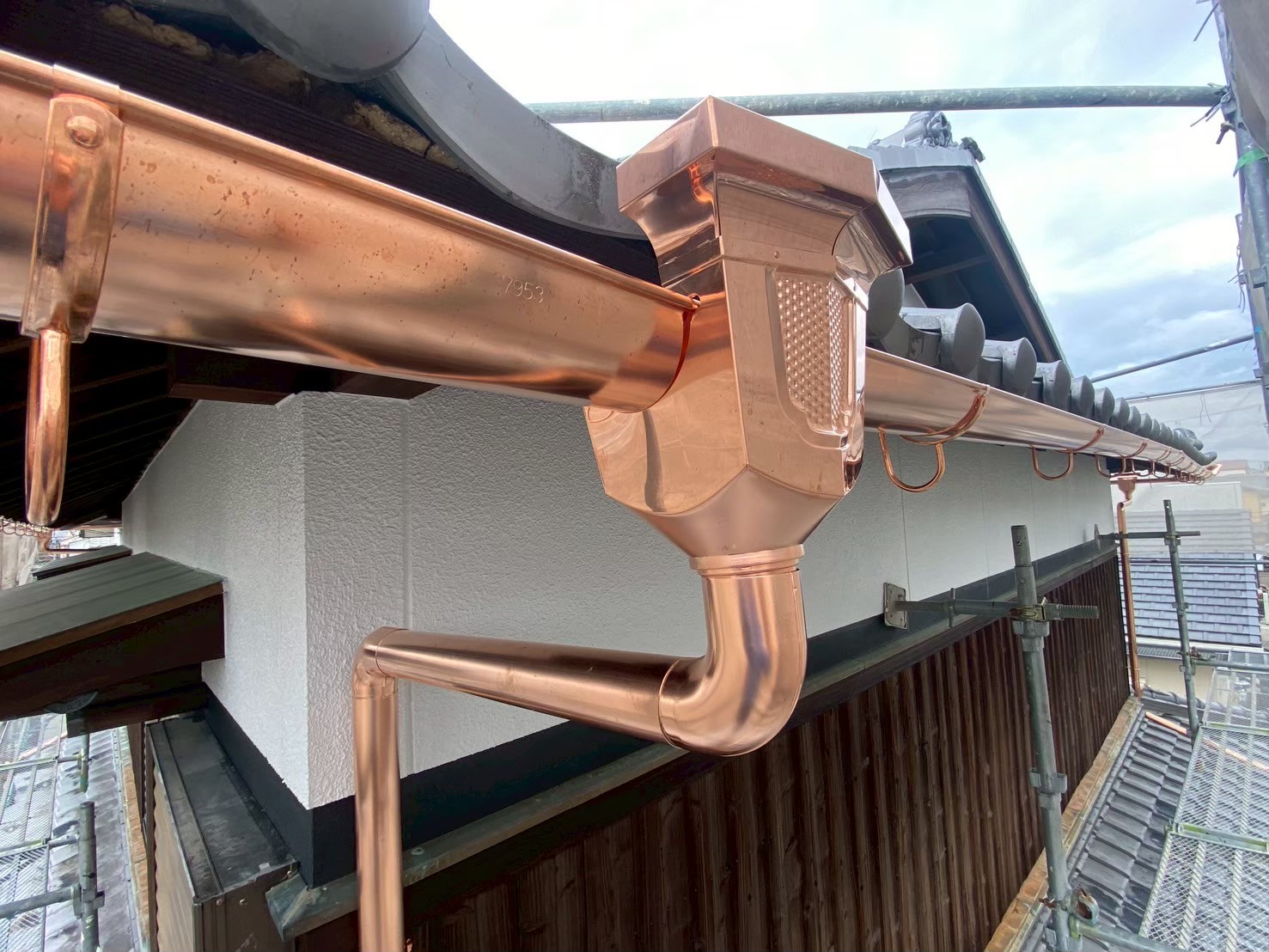
③ Gutters (Rainwater System)
Gutters may need repair or replacement to properly receive rainwater from the roof.
④ Disposal Fees
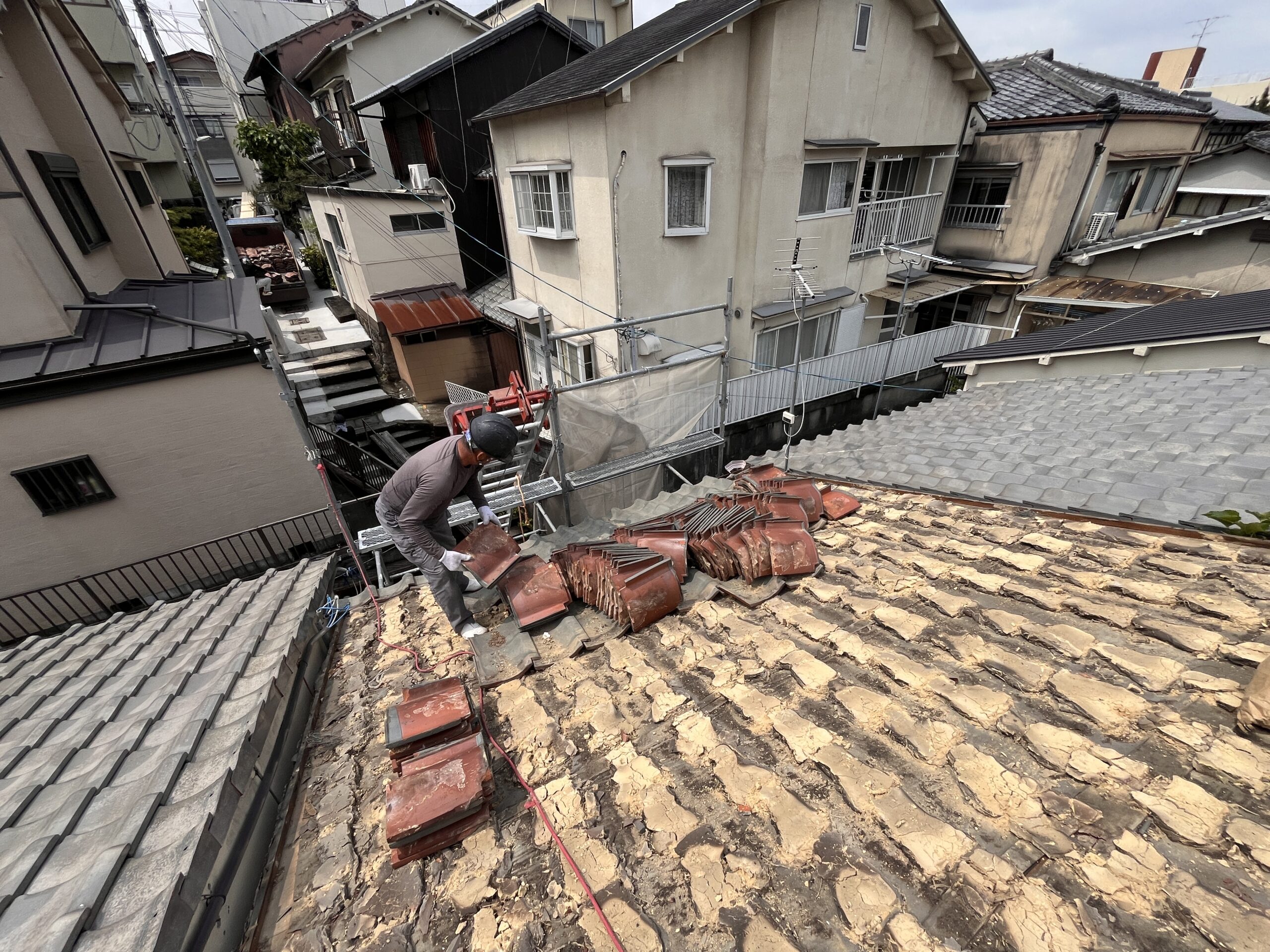
When tiles are removed, disposal fees apply. Roof tiles can weigh several hundred kilograms per home, so disposal is a meaningful portion of the total cost.
⑤ Miscellaneous Costs
These may include preparation costs, parking fees, and road-use permit applications. For homes facing a public road, administrative permission may be required depending on access and site conditions.
5. How to Check a Roof (Practical Methods)
Here are common ways to evaluate roof condition:
- Check for water stains on interior ceilings
- Drone inspection from above
- Ladder inspection by a professional contractor
We often use ladder inspections. When there is an active leak, we first estimate the likely location from inside the home, then focus on that area on the roof.
Safety note: Roof inspections can be dangerous. Avoid climbing onto a roof without proper training and equipment.
6. Case Study: Full Re-Roofing in Sakyo Ward, Kyoto
We renovated an older home in Kyoto by replacing a traditional tile roof with a metal roofing system.
Instagram embed:
We share more renovation case studies on Instagram as well.
7. Frequently Asked Questions
Q. Is the roof inspection free?
A. Yes. Roof inspection and quotation preparation are free of charge.
Q. Are there any subsidies available for roof work in Kyoto?
A. Kyoto City has subsidy programs that may apply to certain roof renovation projects. We can also support the application process—please contact us for details.
8. Need Help with an Old Roof in Kyoto?
If you’re worried about the roof of a machiya or older Kyoto home, contact us—even if it feels like a small issue. The roof is one of the most critical parts of any building. Early inspection and proper action can prevent major repair costs later.
Next Steps
Learn the full renovation process in English: Kyoto Renovation for Foreigners
Or contact us for a free consultation: Contact
— Tsuji House