Can You Add an Interior Window? Checking Frame Depth Before Installing Inner Windows in Kyoto
 tsujikenzai
Location: Kyoto | Work: Pre-installation survey for interior (secondary) windows | Time on site: about 30 minutes
1. What the Owner Asked
The owner of an older house in Kyoto wanted to add interior windows (often called inner windows or secondary glazing in English, uchimado in Japanese) to reduce winter cold and condensation. Single-pane aluminum sash windows are standard in older Japanese homes, and they lose a great deal of heat. An interior window is a second window installed on the room side of the existing one, creating an insulating air layer without touching the exterior wall.
2. What We Checked
Before quoting, we visited the house to measure each window. An interior window is fitted into the wooden casing (the frame that surrounds the window on the inside of the room). The product the owner is considering needs 58 mm of clear depth between the existing sash and the edge of that casing. If the casing is shallower than that, the interior window cannot be mounted directly.
So the survey is simple: a tape measure at every window, top and sides, checking whether 58 mm is available.
3. What We Found
[IMAGE 1: Measuring the frame depth at a window that does not have enough room]
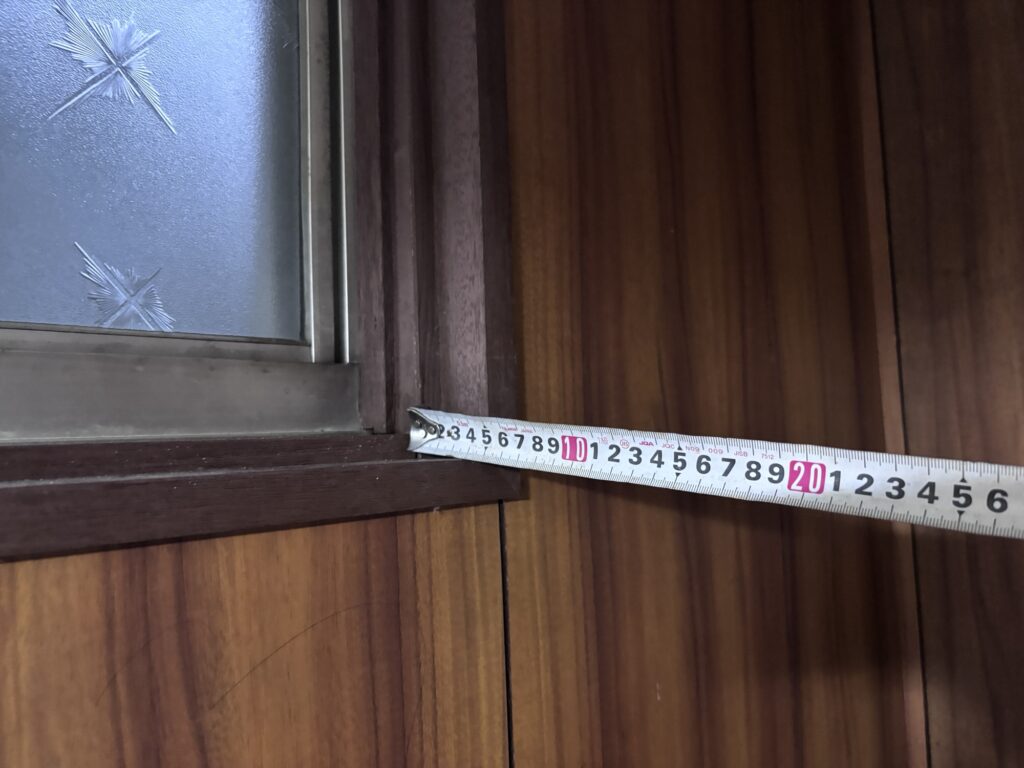
Window 1 – extension frame needed. The depth here is not the problem; the shape is. The wooden casing is stepped rather than flat, so there is no continuous, level surface of 58 mm for the interior window to sit on. To install it, we first attach an extension frame (fukashi-waku in Japanese) to the casing, which bridges the step and gives the new window a solid, square base.
[IMAGE 2: Measuring the frame depth at a window with enough room]
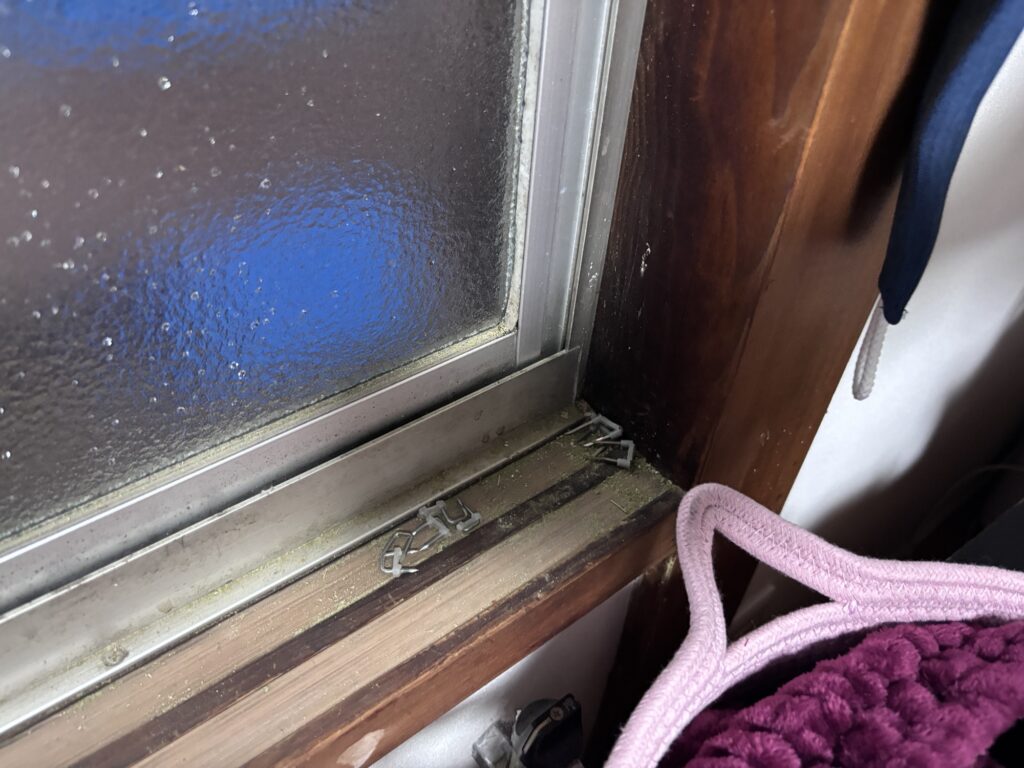
Window 2 – fits directly. This window has more than 58 mm of depth, so the interior window can be installed straight onto the existing casing. No extra parts required.
4. What This Means for the Owner
- Windows that need an extension frame cost a little more, because of the extra material and labor.
- We quote window by window, so the owner can see exactly which openings need the extra step and decide how many to do.
- The extension frame is finished to match the existing wood, so it does not look like an add-on once the window is in.
In older Kyoto houses, window casings were often made by hand and vary from room to room, so we measure every window rather than assuming they are all the same.
A Note on Subsidies
Depending on the glass you choose for the interior window, the work may qualify for Japan's national window insulation subsidy. Higher-performance glass generally qualifies for a larger amount. Tsuji House can prepare the application and receive the subsidy on your behalf, so you do not need to deal with the Japanese paperwork yourself. We will tell you at the quotation stage which options are eligible.
FAQ
Will interior windows stop condensation?
They reduce it significantly. The air layer between the two windows keeps the inner glass closer to room temperature, so far less moisture condenses on it. Some condensation may still appear on the original outer window, which is normal.
How long does installation take?
Once the windows are manufactured (usually a few weeks after ordering), installation itself is quick: typically under an hour per window, and a whole house can often be done in a single day. Windows needing an extension frame take a little longer.
Thinking About Interior Windows for Your Kyoto Home?
We can measure your windows, explain which options qualify for subsidies, and give you a window-by-window quotation in English. Contact Tsuji House to arrange a visit.