Lifting the Tatami: Termite Damage Under a Kyoto Machiya Floor (Matsugasaki, Part 1)
 tsujikenzai
Location: Matsugasaki, Kyoto | Work: Tatami removal and floor inspection | Series: Matsugasaki Machiya Renovation, Part 1
This is the first in a series of short articles following the renovation of a traditional wooden townhouse (machiya) in Matsugasaki, in the north of Kyoto. We are breaking the project into stages so that owners of similar houses can see what actually happens inside a Kyoto renovation, one step at a time.
1. Why We Start With the Tatami
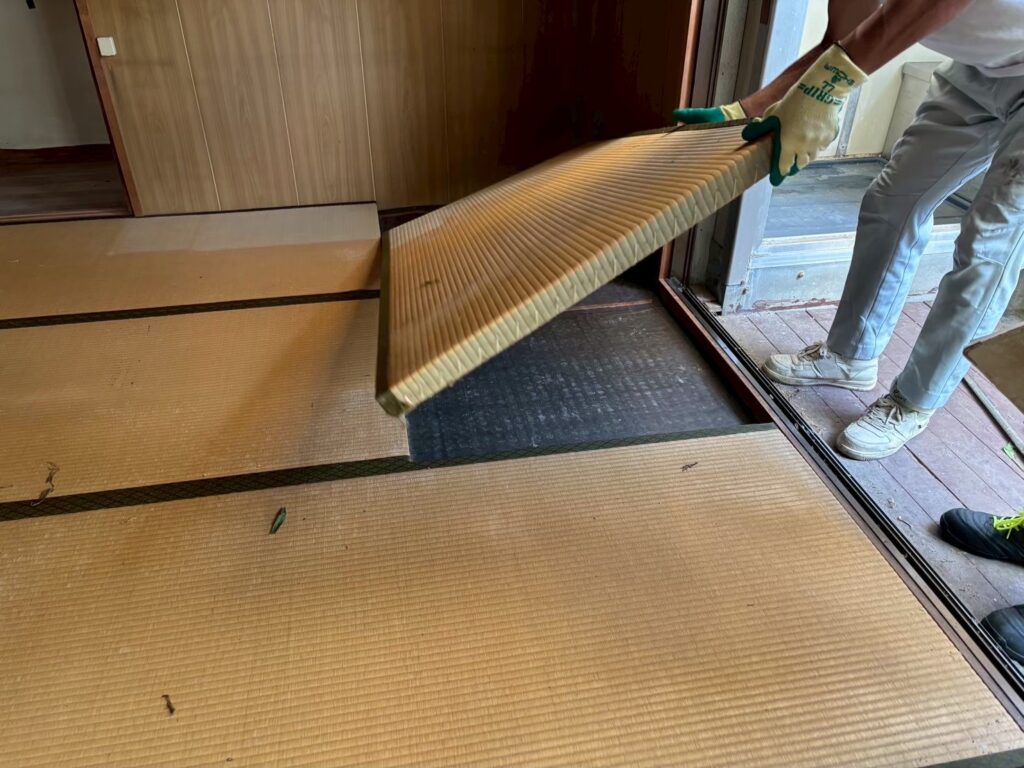
In an older Japanese house, the tatami mats sit on wooden floorboards, which in turn rest on joists and sills close to the ground. You cannot see the condition of any of that until the tatami come out. So in almost every machiya renovation, lifting the tatami is the first real inspection of the house, and it is where surprises tend to appear.
[IMAGE 1: Lifting the tatami mats to expose the floor beneath]
2. What We Found: Termite Damage in the Door Sill
Once the mats were out, we could see that the sill of the sliding fusuma doors (the wooden rail that the paper-covered room dividers slide along, called shikii in Japanese) had been eaten by termites. The timber directly under the rail had been hollowed out and crumbled away, leaving the rail itself sitting on almost nothing. From above, with the tatami in place, there had been no sign of it.
[IMAGE 2: Close-up of the termite-damaged timber beneath the fusuma sill]
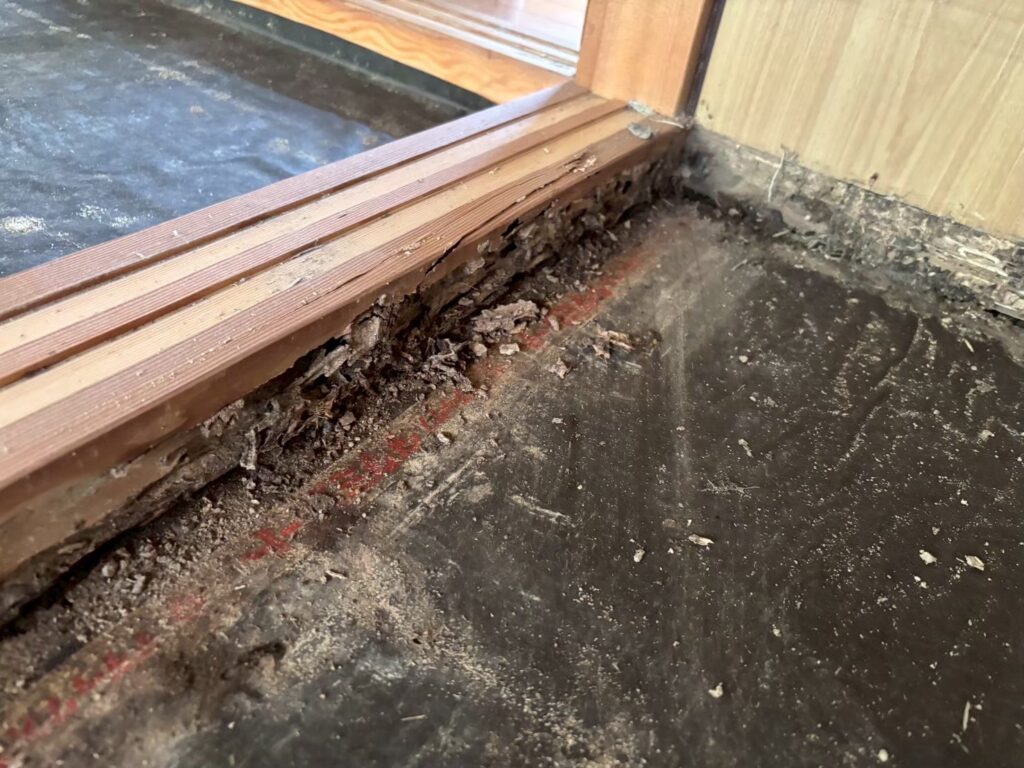
This is common in Kyoto. The city is humid, older houses sit low to the ground, and the timber near the floor stays damp for long periods. Termites work from the inside of the wood outward, so a sill can look fine on the surface while most of the interior is gone.
3. What We Did
- Checked the surrounding timber (floor joists, the base of the posts, and the neighboring sills) to see how far the damage extended.
- Removed the damaged section and replaced it with new timber, so the fusuma doors slide properly again and the floor has solid support.
- Treated the area against termites before closing the floor back up.
4. What This Means If You Own an Older Kyoto House
Termite damage is one of the most frequent hidden issues we find in machiya, and it is rarely visible until the floor is opened. We always tell owners to expect some repair work at this stage and to keep a margin in the budget for it. The good news is that, caught during renovation, it is usually a contained repair rather than a structural problem.
FAQ
Can termite damage be found before buying a house?
Partly. A pre-purchase inspection can check the crawl space, the base of posts, and any accessible timber, and can spot signs such as mud tubes or soft wood. But damage under tatami or inside walls often only shows during renovation.
Does the whole floor need replacing?
Usually not. We replace the damaged members and treat the area. Full floor replacement is only needed when the damage is widespread or the joists have lost their strength.
More From This Renovation
Read the other stages of this project in the Matsugasaki Machiya Renovation series. If you own or are considering an older house in Kyoto, contact Tsuji House for an inspection in English.