Rebuilding the Floor: New Joists, Beams and Termite Treatment in a Kyoto Machiya (Matsugasaki, Part 6)
 tsujikenzai
Location: Matsugasaki, Kyoto | Work: Floor structure reinforcement and termite treatment | Series: Matsugasaki Machiya Renovation, Part 6
1. Why We Opened the Whole Floor
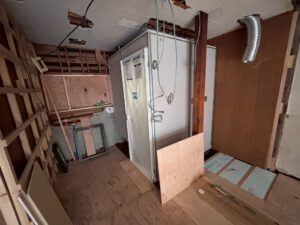
After the tatami came out and we found termite damage in the door sill (Part 1), the next question was the condition of the floor structure itself. In a machiya, the floor is carried by two layers of timber: the floor beams (obiki), which rest on stone or concrete footings on the ground, and the joists (neda), which run across them and carry the floorboards. Both sit close to damp ground for decades, and in this house they had softened and sagged in places.
Rather than patch a few spots, we took up the floorboards across the room so we could see, and fix, everything at once.
[IMAGE 1: The floor removed, showing the old footings and the first new beams going in]
2. New Beams and Joists
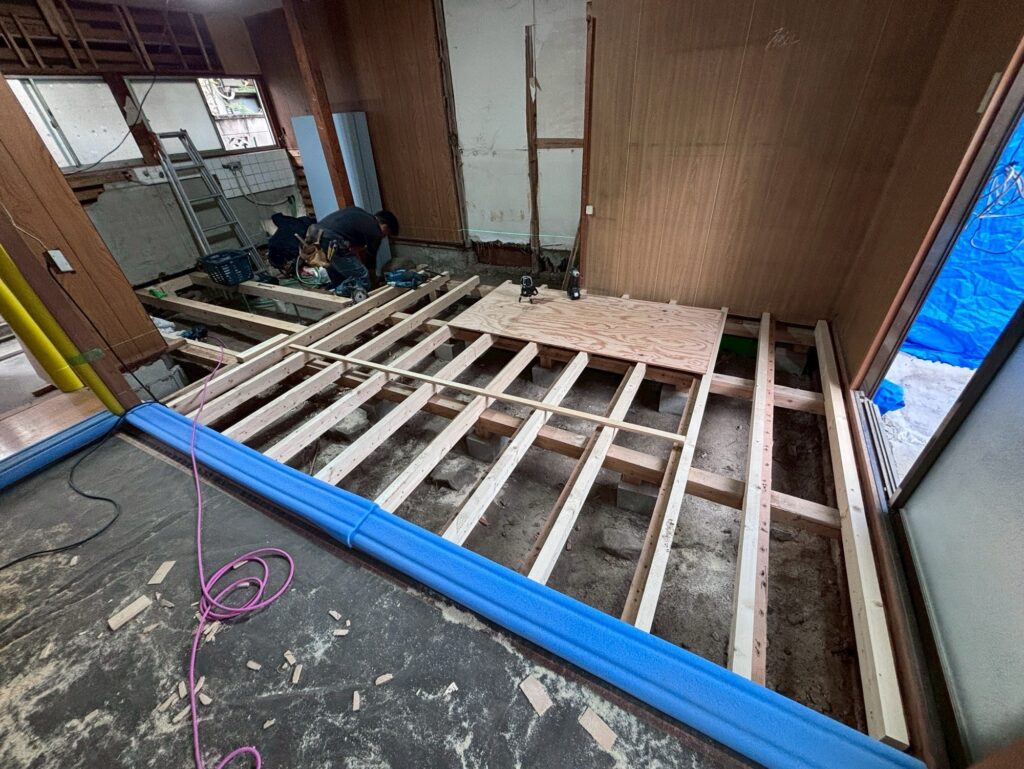
Our carpenter replaced the weakened beams with new timber set on the footings, then laid new joists across them at close, even spacing and leveled the whole frame with a laser. Where the old timber was still sound we kept it and added new members alongside; where it was not, it came out. The new plywood subfloor goes directly on top of this frame, so getting it flat and solid now is what makes the finished floor feel firm underfoot for the next few decades.
[IMAGE 2: New beams and joists laid and leveled, with the first sheets of plywood subfloor in place]
3. Plumbing While the Floor Is Open
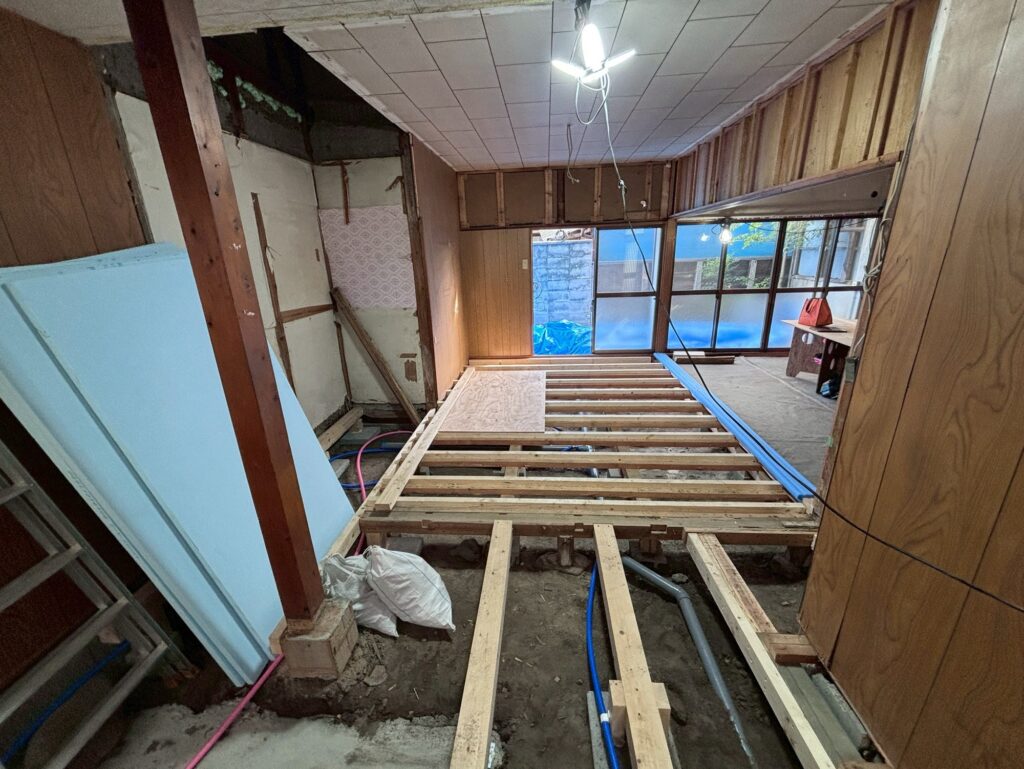
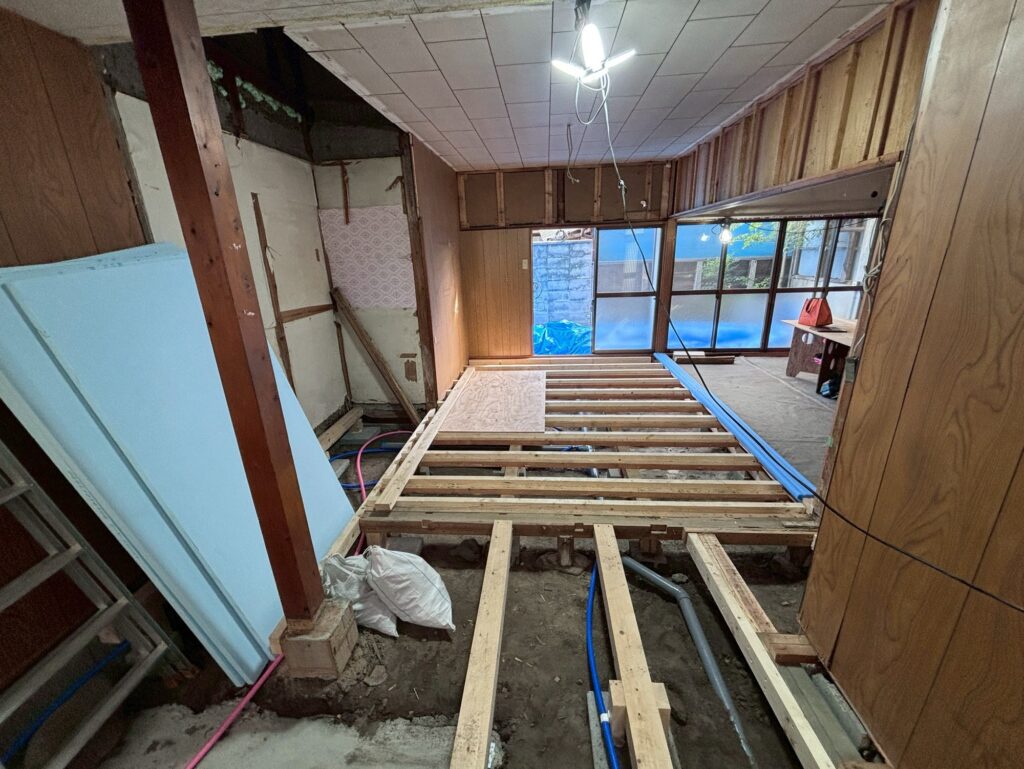
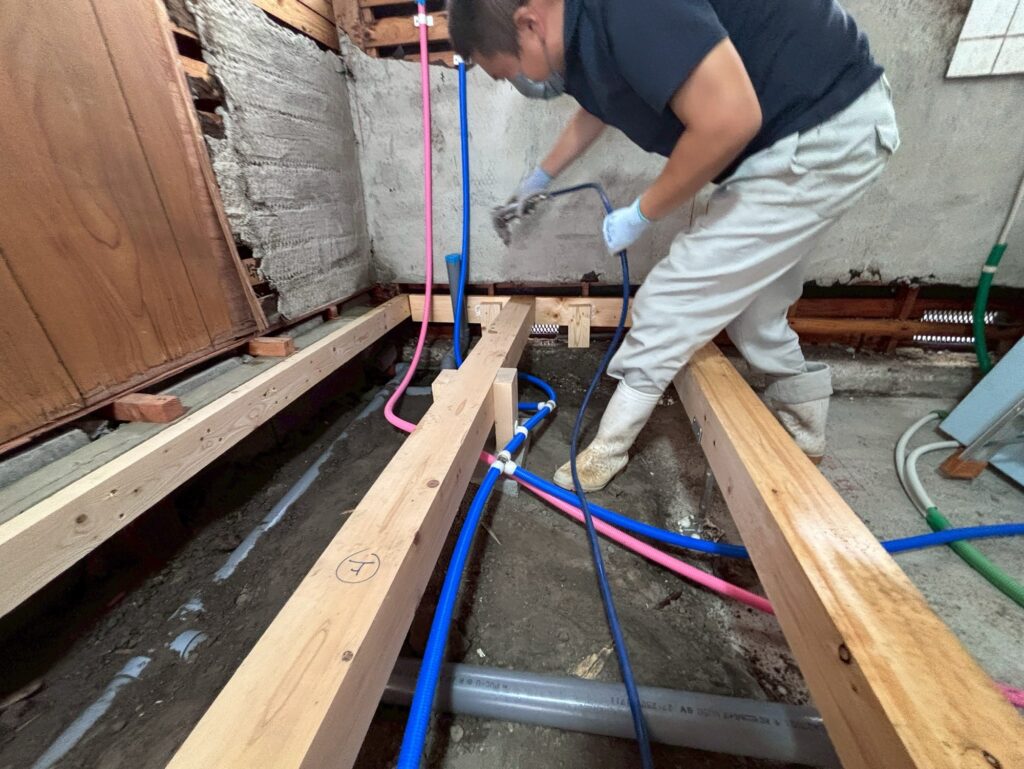
An open floor is also the only easy chance to run new services. The new hot water (pink) and cold water (blue) lines for the bathroom and kitchen, and the new drainage pipe, were all routed under the floor at this stage, before the subfloor closed everything in.
[IMAGE 3: Running new hot and cold water lines and drainage between the new joists]
4. Termite Treatment
Because we had already found termite damage in this house, and because the timber near the ground is exactly where termites start, we sprayed a termite treatment over the new and existing floor timber and the surrounding ground before closing the floor. This is a small job that can only be done properly while the floor is open, and it gives the owner peace of mind that the new structure is protected from the start.
5. What This Means for Owners
Floor structure is invisible once the renovation is finished, and it is tempting to skip it. We recommend the opposite: if the floor is coming up anyway, this is the cheapest moment you will ever have to reinforce it, re-run the plumbing, and treat against termites. Doing the same work later means lifting a finished floor.
FAQ
How long does termite treatment last?
Most treatments used in Japan are effective for around five years, after which a re-treatment through the crawl space is recommended. We note the date so the owner knows when it is due.
Can floor insulation be added at this stage?
Yes, and it is the ideal time. Insulation boards fit between the new joists before the subfloor goes on, which makes a noticeable difference to how cold the floor feels in winter.
More From This Renovation
Read the other stages of this project in the Matsugasaki Machiya Renovation series. Worried about the floor of an older Kyoto house? Contact Tsuji House for an inspection in English.