
Outside the Original Scope: Repairing a Cracked Exterior Wall and a Loose Attic Vent (Matsugasaki, Part 10)
 tsujikenzai
Location: Matsugasaki, Kyoto | Work: Exterior wall crack repair, protective coating, attic vent repair | Series: Matsugasaki Machiya Renovation, Part 10
1. What We Found
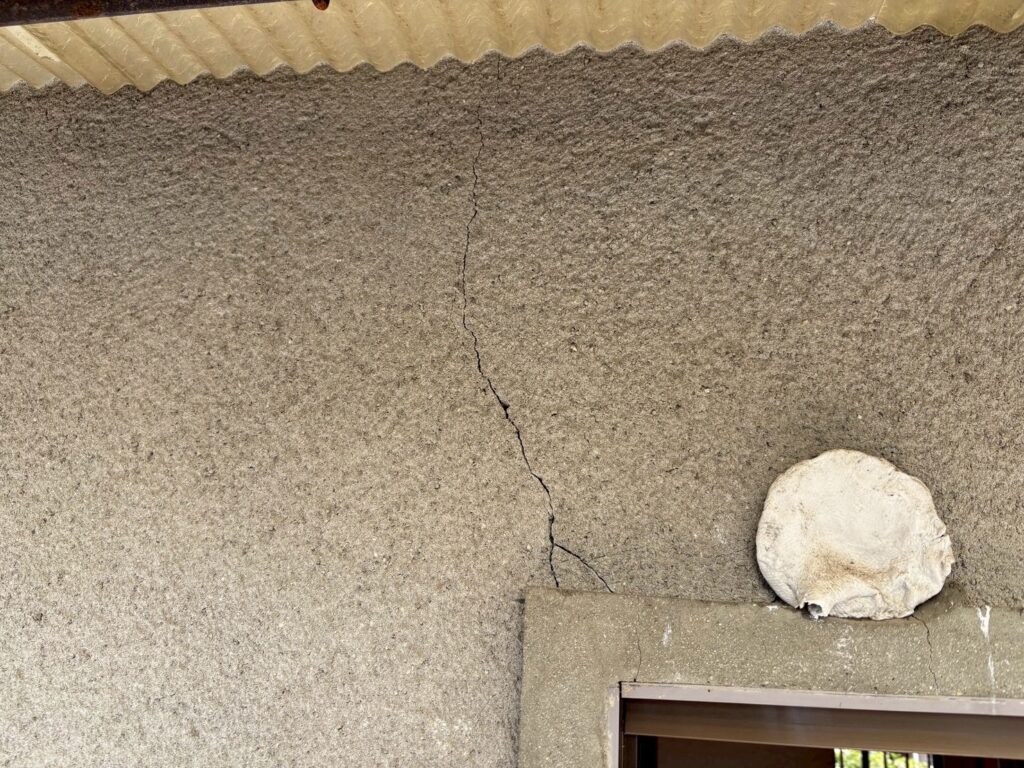
This renovation was planned as interior work. But once we were on site every day, one exterior wall was impossible to ignore: the render was cracked badly, in long lines and in a web of smaller fissures. Cracks like these let rain into the wall. On a wooden house, water that gets behind the exterior finish reaches the timber frame, and that is how rot and termite damage start.
We told the owner what we had seen, explained the risk, and agreed to add this wall to the project.
[IMAGE 1: The cracked exterior wall before repair]
2. Scaffolding One Wall
Scaffolding is a large part of the cost of any exterior work in Japan, and a full wrap of the house would not have been justified for one wall. So we scaffolded that single face of the building only. This is a sensible middle path when the rest of the exterior is still in acceptable condition: it keeps the cost proportionate to the problem.
3. Caulking and Painting
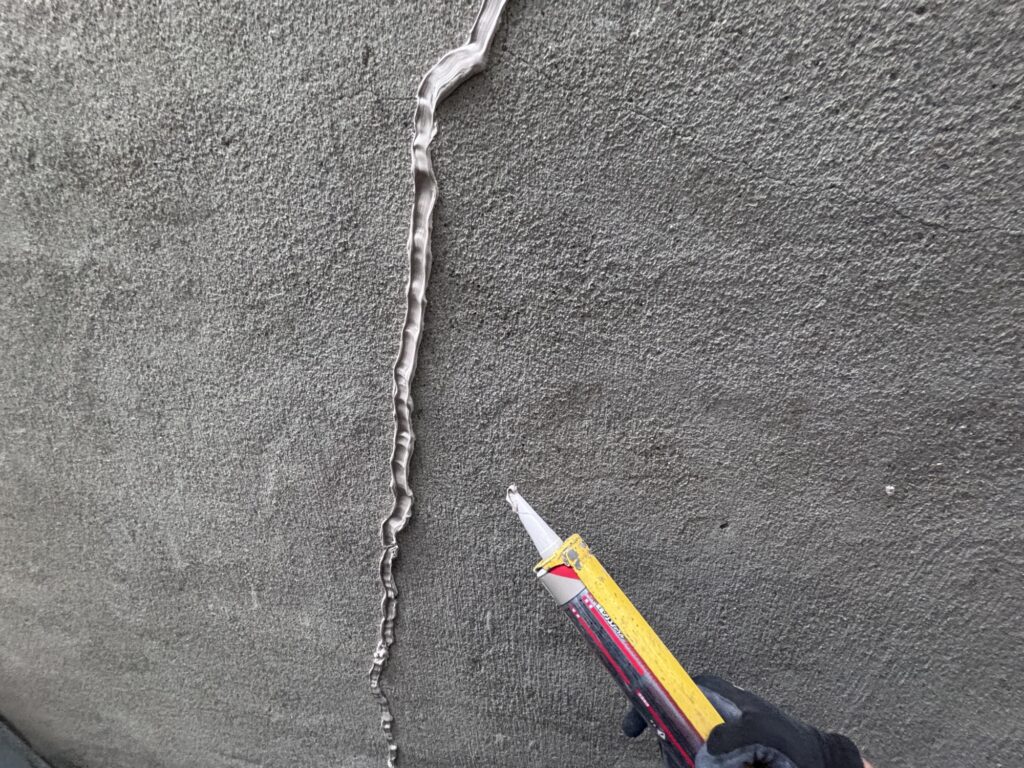
Each crack was opened slightly, cleaned, and filled with a flexible sealant (caulking) so that the wall can move with temperature and humidity without reopening. I did the caulking myself. After the sealant cured, the whole wall was painted with a silicone-based exterior coating, which seals the surface against rain and gives the wall another decade or more of protection.
[IMAGE 2: Caulking the cracks before painting]
4. The Attic Vent
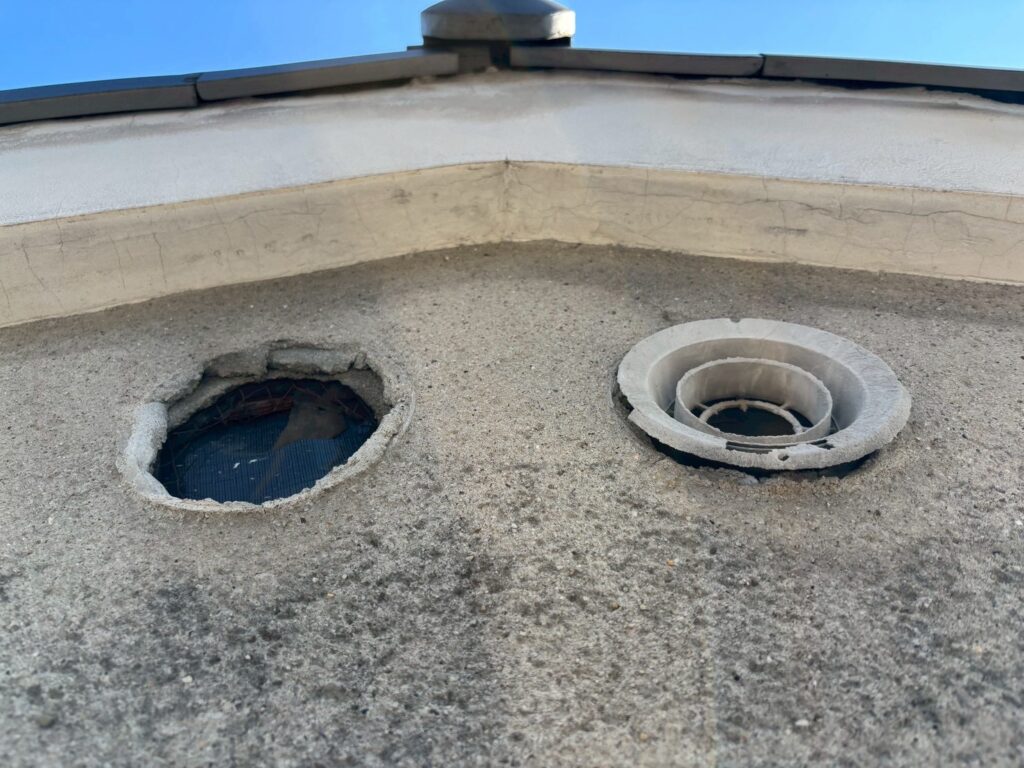
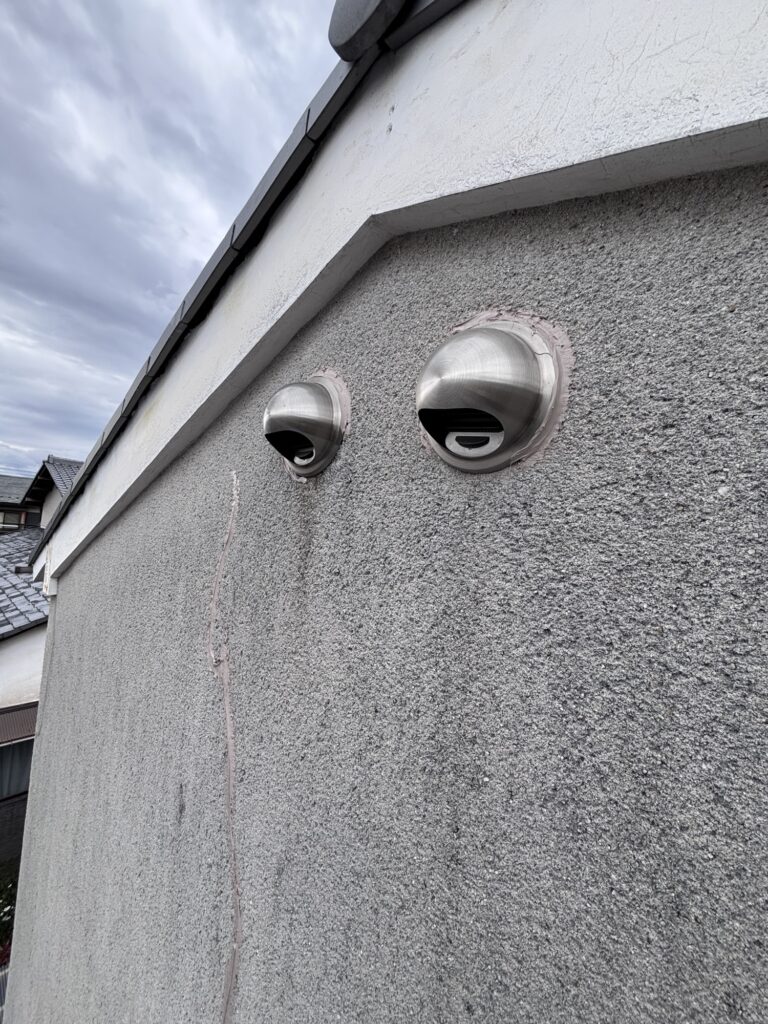
While we were up on the scaffold we also found that the attic ventilation grille (garari in Japanese, the louvered vent under the roof that lets air circulate through the roof space) had come loose and was hanging from the wall. An open vent hole is an invitation to rain, birds and insects, and a roof space without proper airflow collects moisture. We refitted and sealed it.
[IMAGE 3: The loose attic vent before repair]
[IMAGE 4: The vent refitted]
5. Why We Mention Work Like This
Neither of these items was in the original quotation. We could have finished the interior, handed over the keys, and said nothing. But an exterior wall that leaks will undo an interior renovation from the inside out, and a loose vent is a small fix that prevents a large problem. Part of our job is to notice what the owner, especially one living overseas, cannot see for themselves, and to say so. Small additions like these, agreed with the owner before we do them, are how a renovation stays sound for years instead of months.
FAQ
How long does caulking and painting last?
A good silicone exterior coating typically protects a wall for ten to fifteen years in Kyoto's climate. The sealant underneath lasts a similar period. We note the date so the owner knows when to check it again.
Will you add work without asking?
No. When we find something outside the scope, we photograph it, explain the risk and the cost, and let the owner decide. The only exception is a genuine emergency that cannot wait for a reply.
More From This Renovation
Read the full story of this project, with links to every stage, in Renovating a Machiya in Matsugasaki, Kyoto: The Full Story. Worried about cracks in the walls of an older Kyoto house? Contact Tsuji House for an inspection in English.