A Simple Kitchen for a Rental House: Why We Skipped the System Kitchen (Yamashina, Part 2)
 tsujikenzai
Location: Yamashina, Kyoto | Work: Kitchen replacement, new plywood backing, floor and wall finishes | Series: Yamashina Rental House Renovation, Part 2
1. The Kitchen Before
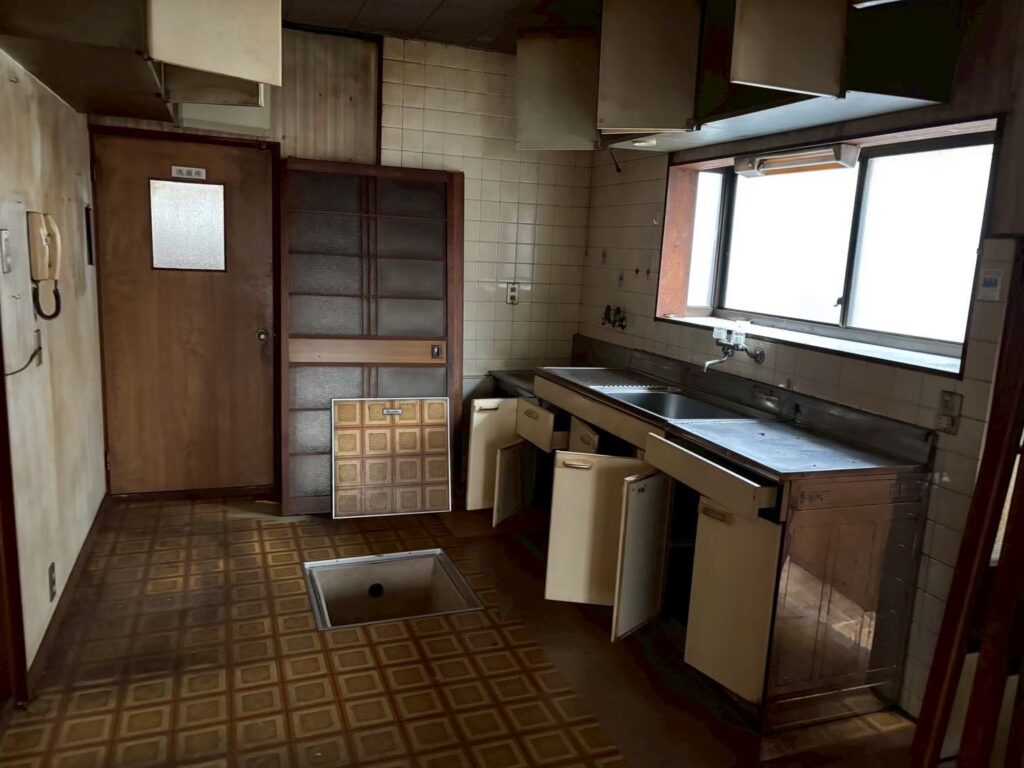
The original kitchen was decades old: a steel sink unit, tiled walls, stained wall panels and a worn patterned vinyl floor. It still worked, but no tenant today would sign for it.
2. Choosing a Kitchen for a Rental
Japanese kitchens come in two broad kinds. A system kitchen is a fitted set of cabinets, worktop, sink and built-in hob, made to measure and finished to match. It is what most owner-occupiers choose, and it is what we installed in the Matsugasaki machiya. A simple kitchen is a standard sink-and-cabinet unit from the same major manufacturers, without the built-in hob and without the custom finishes. It costs a fraction of the price.
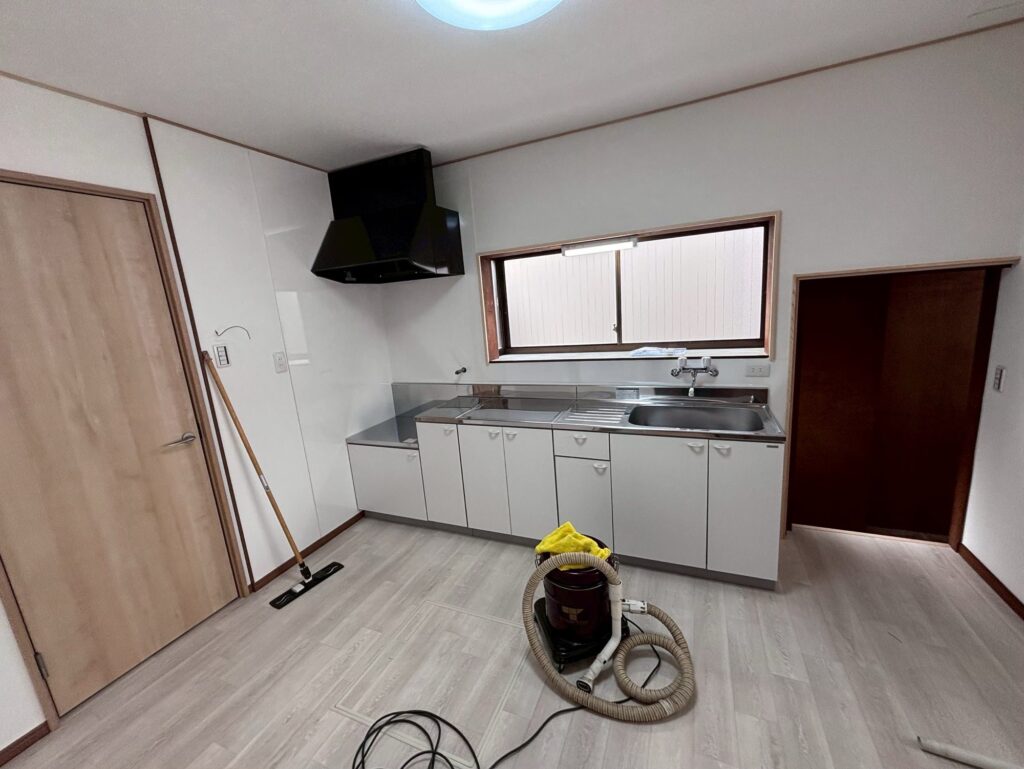
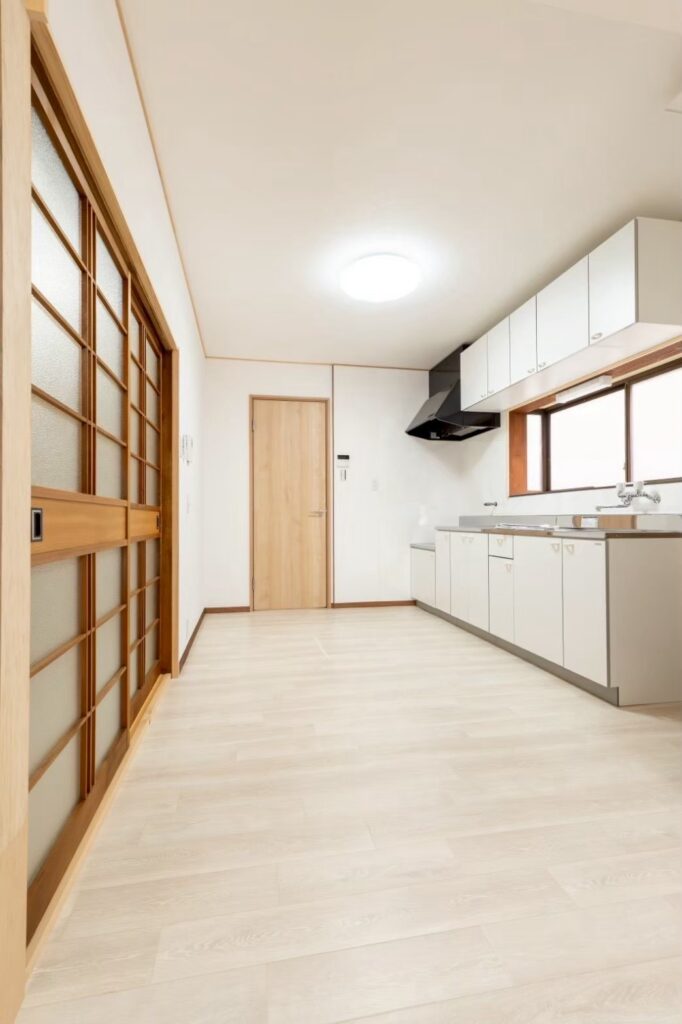
For a rental, we chose the simple kitchen. It is clean, it is new, it comes from a brand tenants recognize, and it does the job. The gas stove is not included: in Japan, tenants normally bring their own tabletop gas stove when they move in, so the landlord does not need to supply one. In the finished photos you can see the lower stand left for it at the end of the worktop, under the new range hood.
3. Behind the Finishes
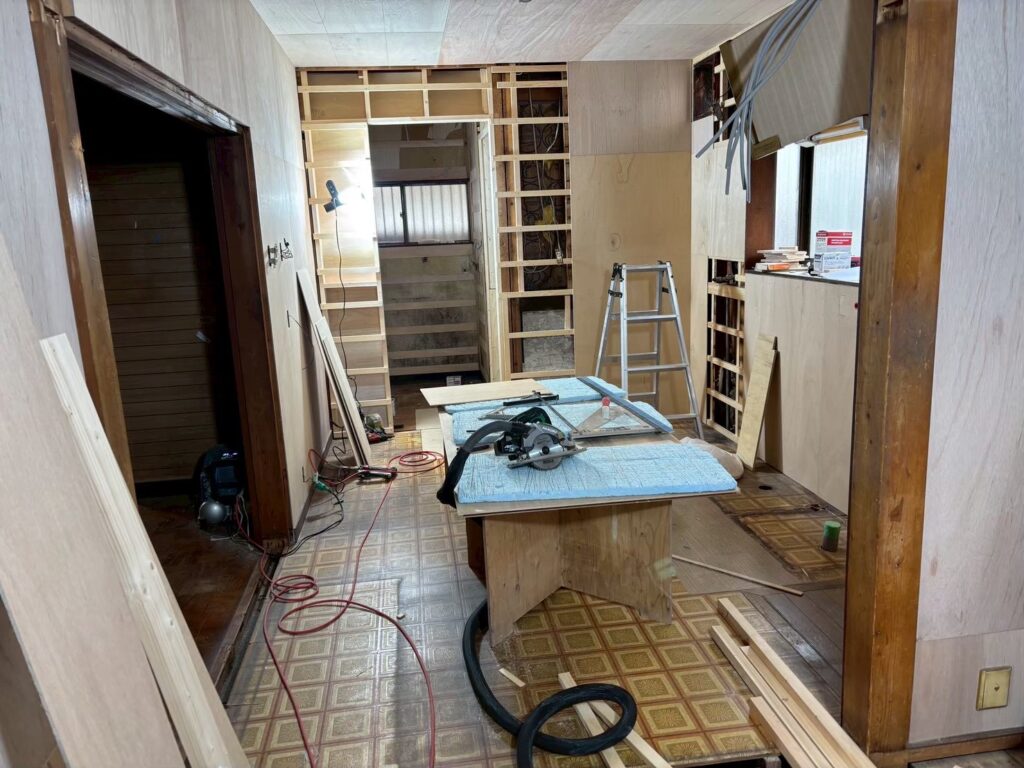
We did not lay new finishes over the old surfaces. The old linings came off and the backing plywood was replaced throughout the room, on new timber battens. Wallpaper and sheet vinyl are thin materials: they only look right, and only last, on a base that is flat and sound. This is the part of the job nobody sees afterwards, and the part that decides how the room looks in ten years.
4. The Finishes
Floor: cushion floor (CF), a sheet vinyl that is waterproof, easy to clean and inexpensive to replace between tenants. Here we used a pale wood-grain pattern. Walls and ceiling: vinyl wallpaper (called cloth in Japan), the standard finish in Japanese rental housing. Neither is luxurious, but both are what a Japanese tenant expects to see, and both can be renewed cheaply when a tenant leaves.
Not everything was replaced. The original wood-and-glass sliding doors were kept. They suit the house, and keeping them cost nothing.
5. The Rental Logic
Every choice in this room followed one rule: spend where it protects the building, save where the tenant will not pay more for it. New backing behind every surface, yes. Custom worktop, no. That rule runs through the whole project.
FAQ
Do Japanese rentals really come without a stove?
Very often, yes. Many apartments and houses are let with a gas connection and a space for a tabletop stove, which the tenant buys. It is one of the small differences that surprise overseas landlords.
Would a system kitchen raise the rent?
In this part of Kyoto, not enough to pay for itself. In a higher-rent area or a property aimed at a different tenant, the answer could be different.
More From This Project
Read the other stages in the Yamashina Rental House Renovation series. Planning a rental renovation in Kyoto? Contact Tsuji House.