From Vacant House to Rental Home in Yamashina, Kyoto: The Full Story in 9 Stages
 tsujikenzai
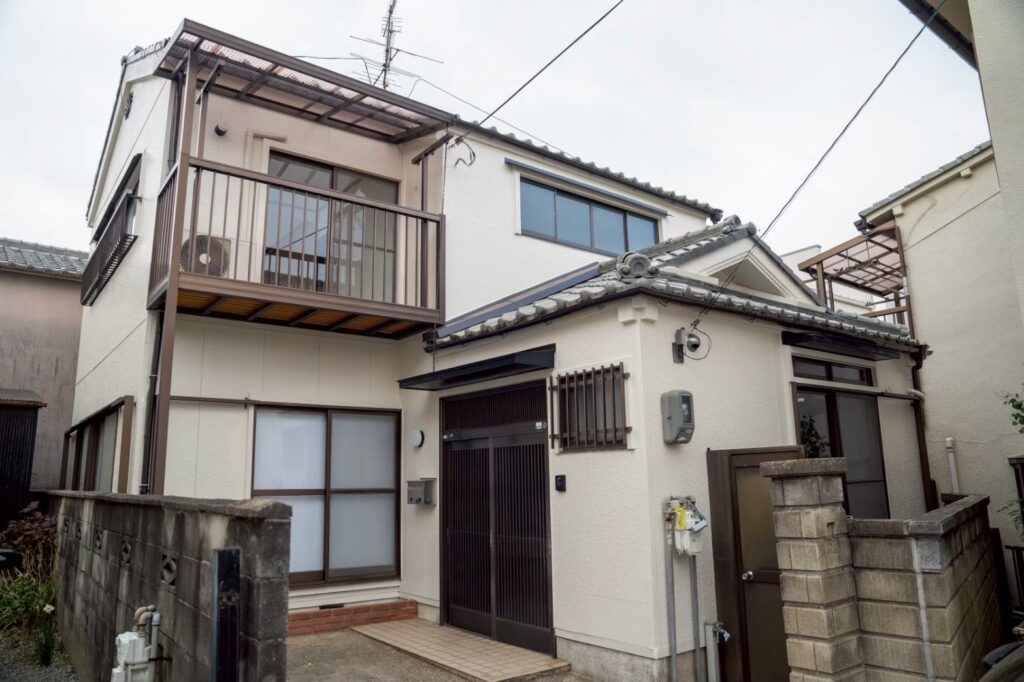
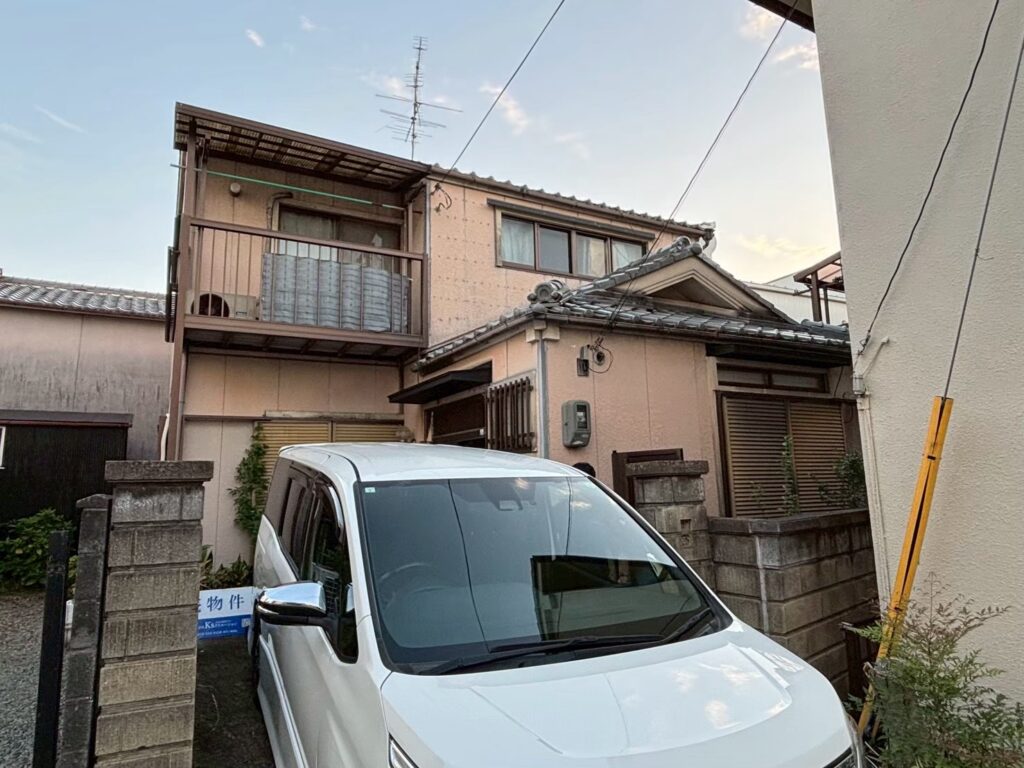
Location: Yamashina, Kyoto | Building: Two-storey vacant house, non-rebuildable plot | Purpose: Family rental | Renovation period: 3 months
An investor friend asked me a simple question: could I find a property in Kyoto, renovate it, and make it earn? This series is the answer. The address, the prices and anything personal are left out. The work itself is shown stage by stage, with the reasoning behind each decision, including the places where we chose to spend nothing at all.
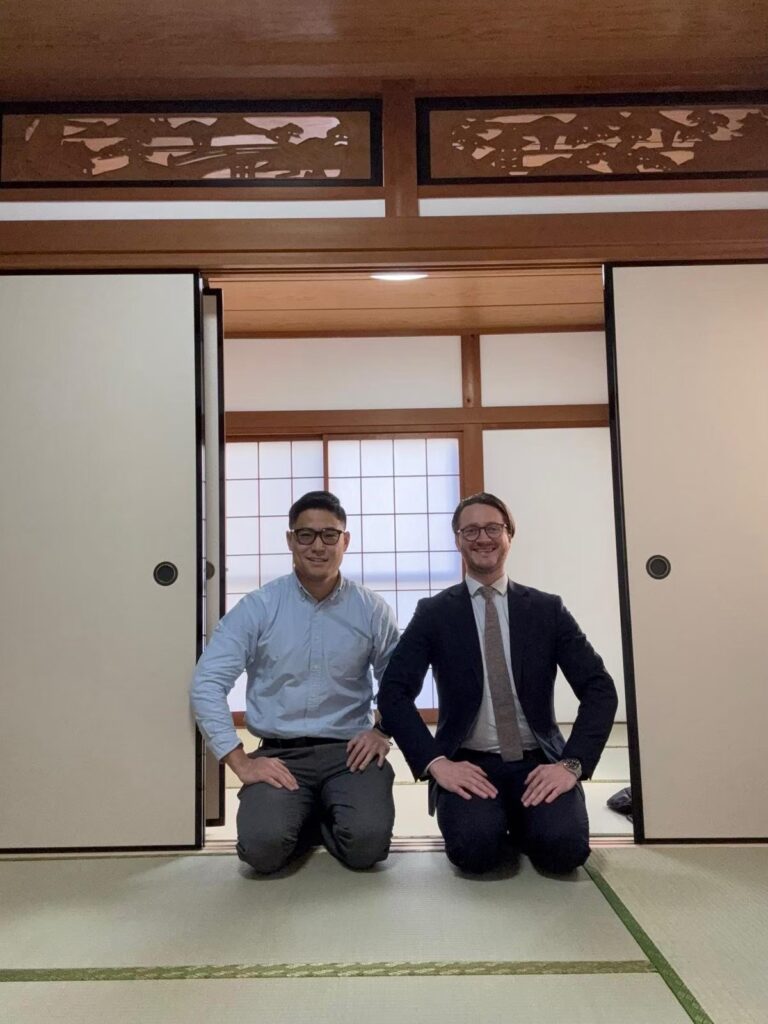
With the friend whose question started this project, in one of the finished tatami rooms.
The Project at a Glance
| House | Two-storey timber house, vacant, sold with the previous owner's belongings inside |
| Plot | Non-rebuildable (saikenchiku-fuka) |
| Goal | A family rental that produces steady income |
| Renovation period | 3 months |
| Layout before | 7DK: seven small rooms and a kitchen-dining room |
| Downstairs after | One open 12-mat LDK, two tatami rooms, new unit bath and changing room |
| Upstairs after | A 9-mat bedroom with a full-width closet, and two 6-mat Western rooms |
| Found during the work | Termite damage behind an inner wall, and an exterior wall coming loose |
Why This House
Yamashina is a residential ward on the east side of Kyoto, one stop from Kyoto Station by train, where ordinary families live and rent. It is not a tourist district, and that is the point: demand comes from people who need a home, all year.
The house was cheap for a specific reason. It stands on a non-rebuildable plot (saikenchiku-fuka in Japanese). Under Japan's building law, a plot must touch a qualifying road by a minimum width before a new building can be approved on it. Many older Kyoto houses on narrow lanes do not meet that rule. The existing house can be kept, repaired and renovated, but if it were demolished, nothing new could be built in its place.
That restriction pushes the price far down, because banks are reluctant to lend on such plots and most buyers avoid them. For an investor who intends to renovate and rent, not rebuild, the logic turns around: a low purchase price and a normal market rent. Our judgment was that, put right, this house would produce steady rental income. So the purchase went ahead.
The Rule We Worked By
A rental renovation is not a smaller version of a home renovation. The budget is set by the rent. Throughout this project we followed one rule: spend where it protects the building or wins the tenant; save where the tenant will not pay more for it.
Where the Money Went, and Where It Did Not
This is how that rule looked in practice. The third row is the one most renovation articles leave out.
| Decision | What it covered | Why |
|---|---|---|
| Full spend | New unit bath and water heater. New plywood backing behind the kitchen finishes. Termite repair and the loose exterior wall. | Water, structure and hot water. These are what fail expensively and what a tenant checks first. |
| Enough, and no more | A simple kitchen instead of a system kitchen. Sheet-vinyl floors. Wallpaper throughout. Thin plywood or filler over old walls instead of stripping them. | Clean, new and what a Japanese tenant expects. All of it can be renewed cheaply between tenancies. |
| Nothing | The toilet, which was left as it was. The side and rear exterior walls. The inside of the closet. The original sliding doors, built-in cupboards and carved woodwork. | They worked, or nobody would pay more rent for them. Some of them are the best things in the house. |
The Nine Stages
Stage 1: Clearing a house full of belongings
The house was sold with the previous owner's possessions in every room: bedding on the tatami, dishes in the rack. Before any building work could start, everything had to be taken out. Read Part 1
Stage 2: A simple kitchen
A standard kitchen unit from a major maker instead of a system kitchen, with the plywood backing behind the finishes renewed and a space left for the tenant's own gas stove. Read Part 2
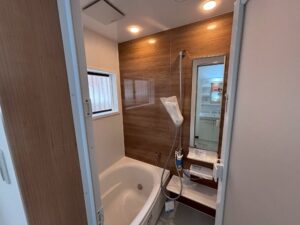
Stage 3: Unit bath, water heater and changing room
The old tiled bathroom became a 1216 unit bath with a new water heater. In the narrow changing room, the washbasin's direction was the hardest decision. Read Part 3
Stage 4: Two tatami rooms into one large bedroom
Upstairs, two 4.5-mat Japanese rooms became one 9-mat Western bedroom, with thin plywood fixed over the old walls as a base for wallpaper. Read Part 4
Stage 5: The futon cupboard becomes a closet
The old oshiire was converted into a full-width closet with folding doors and a hanging rail. Read Part 5
Stage 6: Making an LDK
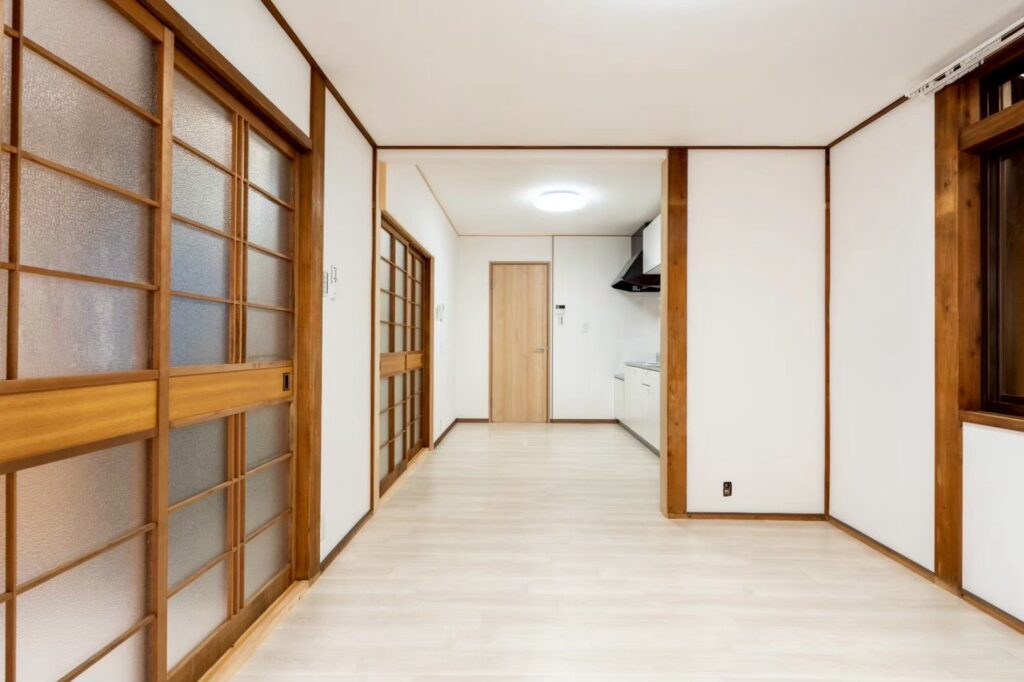
The kitchen and the dark tatami room beside it were stripped back and joined into one family living space. Read Part 6
Stage 7: Painting two walls, not four
Only the two street-facing exterior walls were repainted, to keep the budget in line with the rent. Read Part 7
Stage 8: Two tatami rooms kept, and termites found
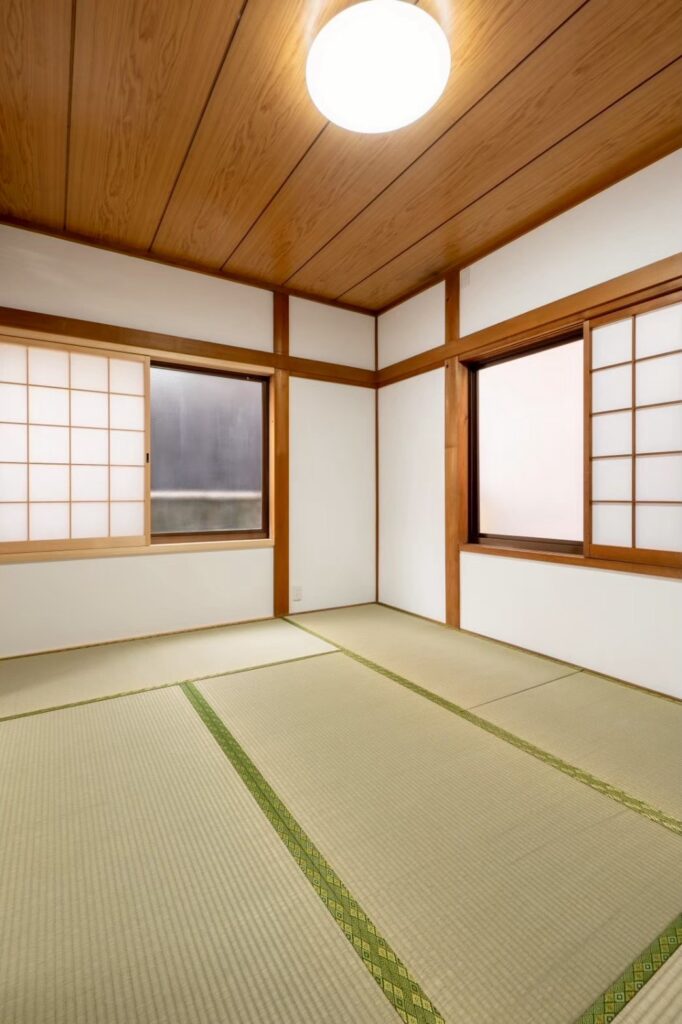
When we opened an inner wall downstairs we found termite damage behind it, and an exterior wall coming away. Both were repaired before the rooms were finished with new walls and new tatami. Read Part 8
Stage 9: Wallpaper over old plywood panels
Instead of stripping the brown panelled walls upstairs, we filled every groove with putty and papered over them. Read Part 9
What We Kept
A rental budget does not mean erasing the house. The original wood-and-glass sliding doors still run along the LDK. The two tatami rooms kept their carved transoms, their display alcove and their timber ceilings. Upstairs, the built-in cupboards stayed, and the wooden posts are still visible in the walls of the new bedroom. Keeping these cost nothing, and they are what make this a Kyoto house and not a white box.
A Rental and a Home Are Different Jobs
Several of the problems in this house were ones we had met before in an owner-occupied machiya: tatami hiding termites, walls of printed plywood, a kitchen at the end of its life. For the owner who was going to live there, we stripped the walls, insulated them and installed a fitted kitchen. Here, with the rent setting the budget, we made different choices for the same problems. If you want to see the two approaches side by side, read the full story of the Matsugasaki machiya.
What an Investor Should Take From This
- Non-rebuildable is a discount, not a defect, if your plan is to hold and rent. Understand the restriction, and that resale will be to a narrower set of buyers.
- A house sold with contents needs a clearing budget before any building work starts.
- Something will be found. Here it was termites and a loose exterior wall. Keep ten to fifteen percent in reserve.
- Layout changes earn more than finishes. Creating an LDK and a large bedroom changed the listing more than any material did.
- Bath and water heater get full spend. Everything else is weighed against the rent.
- Decide what to leave alone. A list of what you will not touch is as much a part of the plan as the list of what you will.
FAQ
Can a foreigner buy a house like this in Japan?
Japan places no nationality restriction on buying property. Financing a non-rebuildable plot is difficult for anyone, so these are usually cash purchases. We are a construction company, not lawyers or tax advisers; for the purchase contract and tax we introduce the right professionals.
Can Tsuji House find a property for me?
We work with a licensed real estate agent in Kyoto to find properties, inspect them before purchase, estimate the renovation, and carry it out. Tell us your budget and whether you want to live in it or rent it out.
How long from purchase to a tenant moving in?
On this project the renovation took three months. Add time for clearing the house before, and for finding a tenant after.
Did you renovate the whole house?
No, and that was deliberate. The toilet, two of the exterior walls and much of the original joinery were left as they were. In a rental, deciding what not to touch is what keeps the numbers working.
Why are the prices not published?
This is a private investor's property, so the purchase price, the renovation cost and the rent stay private. If you are considering something similar, we can talk through realistic budget ranges for your own project.
Thinking About an Investment Property in Kyoto?
If you would like us to look for a house, or to assess one you have found, contact Tsuji House. We will tell you plainly what it needs and what that is likely to cost.