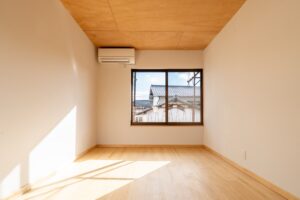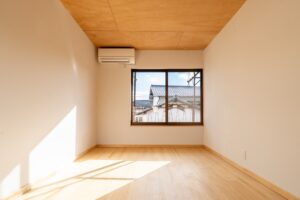
Refreshing the Upstairs Tatami Room: New Japanese Tatami and Painted Walls (Matsugasaki, Part 8)
 tsujikenzai
Location: Matsugasaki, Kyoto | Work: Tatami replacement and wall finishing in the upstairs Japanese room | Series: Matsugasaki Machiya Renovation, Part 8
1. Keeping the Room Japanese
Not every room in a machiya renovation needs to become Western. The upstairs Japanese room (washitsu) in this house was structurally sound and had good proportions, so the plan was to refresh it rather than convert it: new tatami, new wall surfaces, and nothing that would hide what makes the room feel like a machiya.
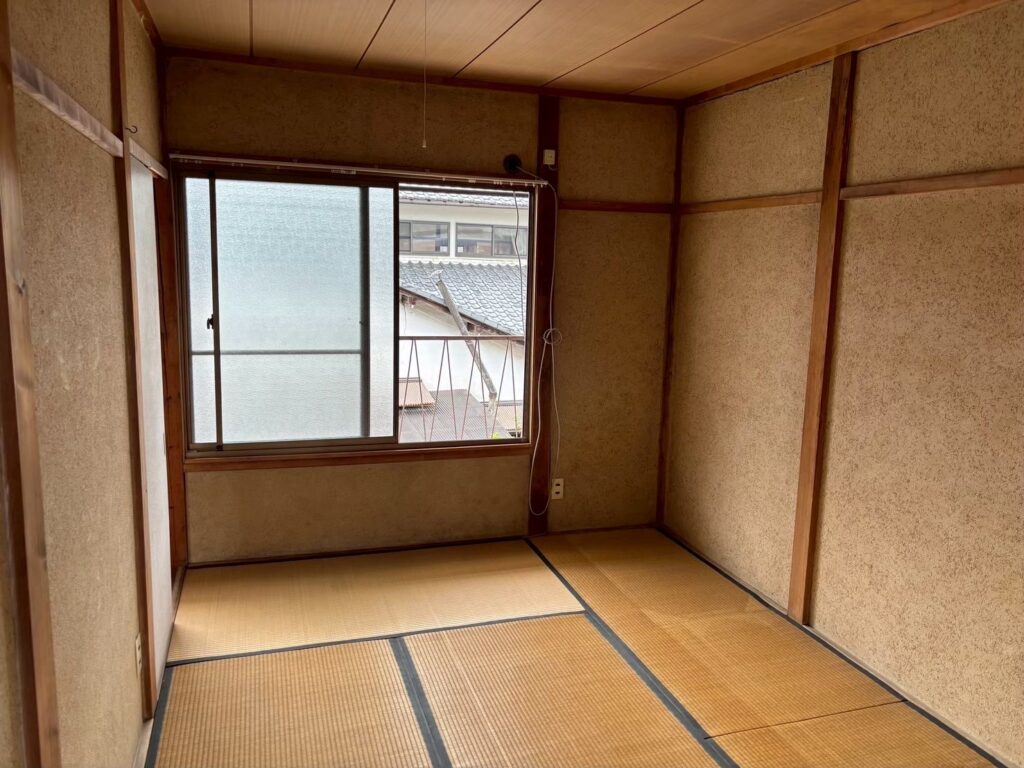
Before work, the room had the classic look of a mid-century Kyoto house: sand-textured plaster walls (juraku-kabe) gone brown with age, worn tatami, a plywood ceiling, and a frosted window. Nothing was broken, but everything was tired.
[IMAGE 1: The tatami room before: aged sand-plaster walls between the posts, worn tatami, frosted window]
2. Walls: Keeping the Exposed Posts
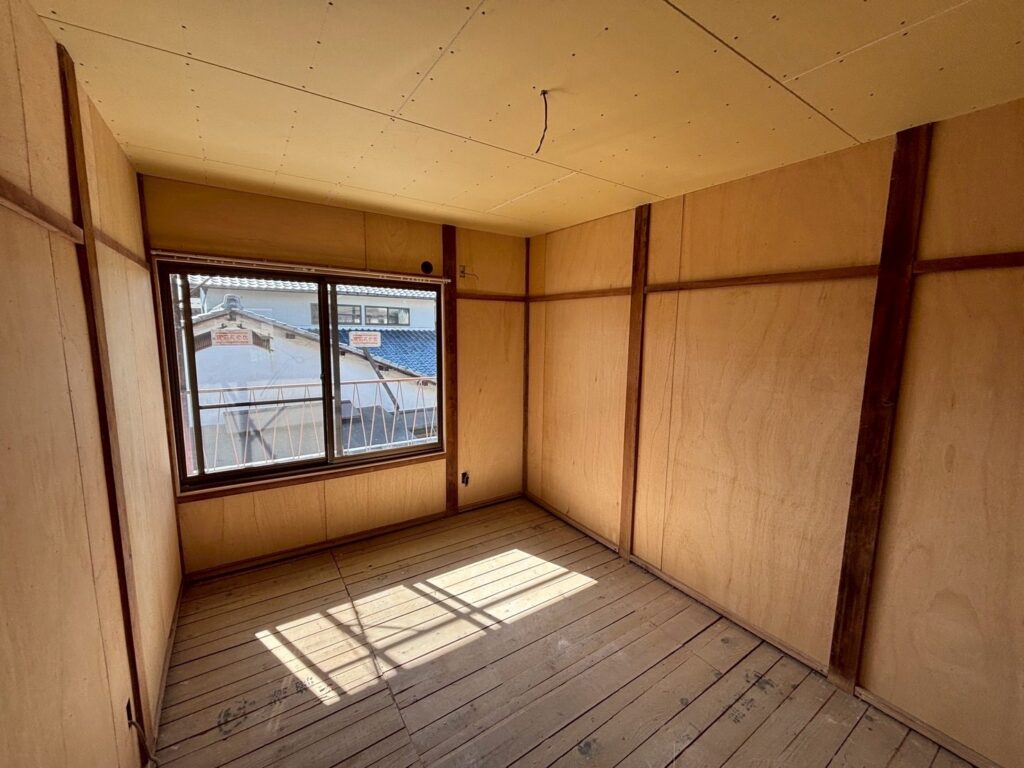
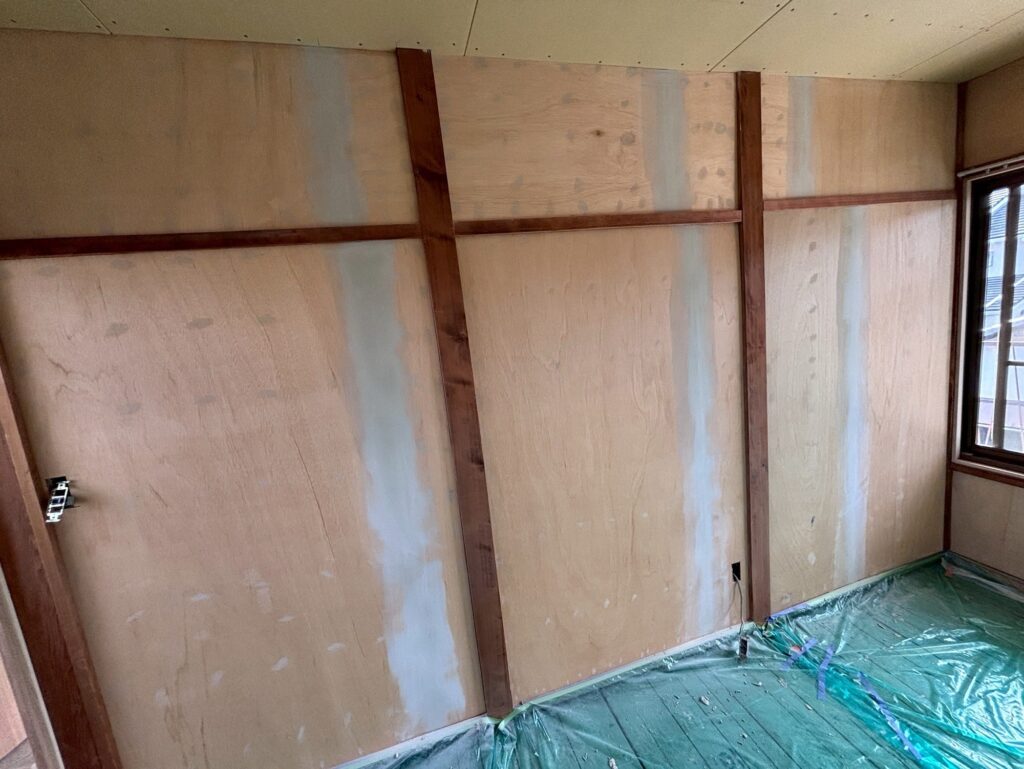
Traditional Japanese rooms use a wall method called shinkabe, in which the structural wooden posts and horizontal rails stay visible and the wall surface sits between them, set back slightly. The alternative, okabe, covers the posts completely for a flat Western wall. This room was built as shinkabe, and we kept it that way: the old plaster came off and thin plywood panels were fitted between the posts, so the rhythm of exposed timber around the room is unchanged. The ceiling was re-boarded at the same time.
[IMAGE 2: New thin plywood fitted between the original posts and rails, new ceiling boards, window replaced]
3. Paint Instead of Wallpaper
The standard Japanese finish for a wall like this is vinyl wallpaper. It is quick and inexpensive, but it has a slight plastic sheen that sits oddly next to natural tatami and bare wood. Instead, the plywood was primed and painted directly. The photo below shows the primer stage, with the joints and nail heads filled and sanded before the top coats went on. A painted surface is matte, takes the light softly, and sits comfortably with the posts and the mats. It can also be repainted in an afternoon whenever the owner wants a change, with no stripping or re-papering.
[IMAGE 3: Walls primed and filled, ready for the finish coats]
4. Domestic Japanese Tatami
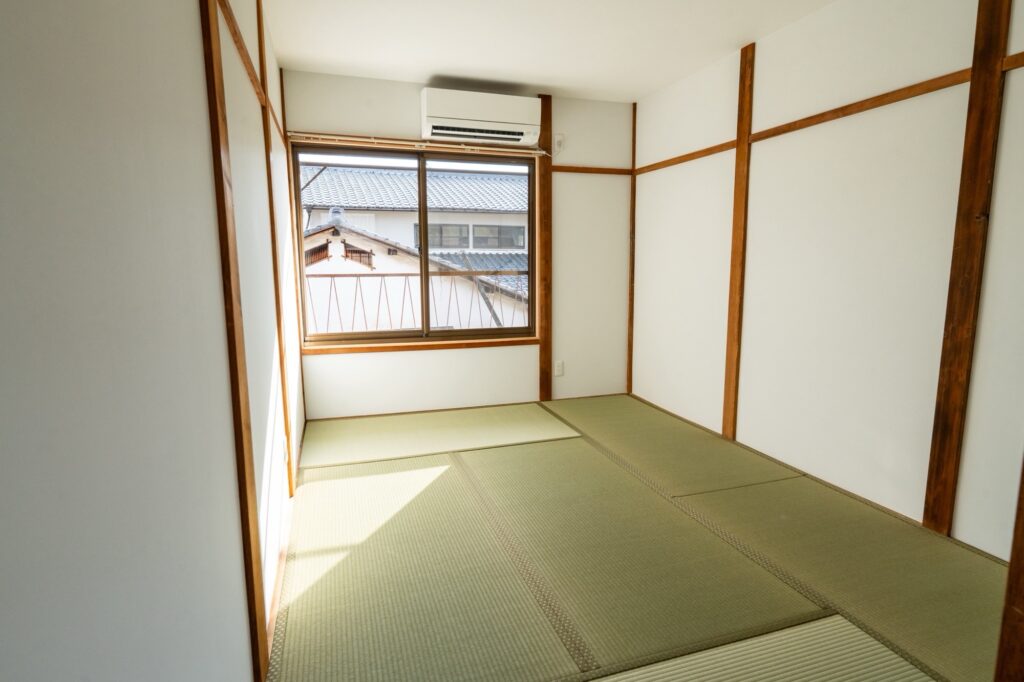
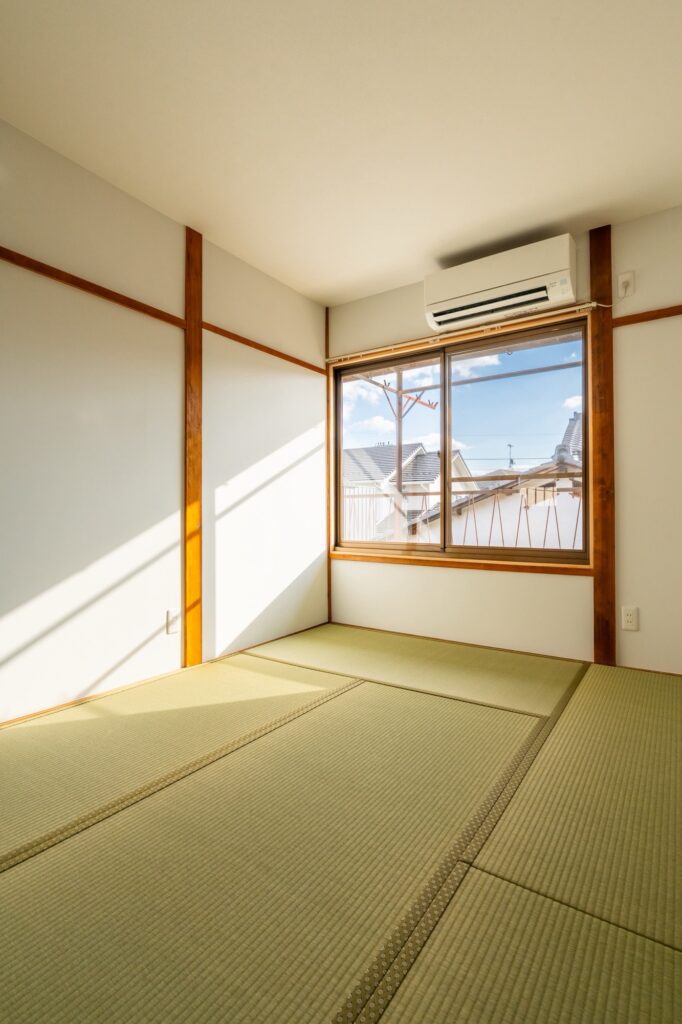
The old mats were replaced with new tatami made from Japanese-grown rush (igusa). Much of the tatami sold in Japan today uses imported rush or synthetic surfaces, which are cheaper but lack the scent, color and softness of the domestic material. For a room that will be slept in and sat on, we recommended the Japanese-grown product. The difference is immediate when you walk in: the room smells of fresh rush and the color is a clean, even green that will mellow to gold over the first year.
With white painted walls, the dark posts and rails, the green tatami, and the new clear window looking out at the tiled roof next door, the room is unmistakably Japanese, and unmistakably new.
[IMAGE 4: The finished room: white painted walls between the exposed posts, new domestic tatami, clear window]
FAQ
How long does tatami last?
The surface mat is usually turned over after about five years and replaced after ten, while the core underneath lasts far longer. Domestic rush tends to wear better than imported.
Can a tatami room be used with Western furniture?
Lightly. A low table and floor cushions suit it best. Heavy furniture with narrow legs will dent the mats, so if you want a bed or desk in the room, use wide, flat feet or a rug underneath.
More From This Renovation
Read the full story of this project, with links to every stage, in Renovating a Machiya in Matsugasaki, Kyoto: The Full Story. Want to keep a Japanese room in your Kyoto house while bringing it up to date? Contact Tsuji House.