Buying a House With Everything Still Inside: Clearing the Belongings (Yamashina, Part 1)
 tsujikenzai
Location: Yamashina, Kyoto | Work: Clearing the previous owner's belongings | Typical cost: ¥250,000–¥500,000 for a two-storey house | Series: Yamashina Rental House Renovation, Part 1
This is the first article in a series following a vacant house (akiya) in Yamashina, Kyoto, that we found and renovated for an investor friend, to be rented out as a family home. The address, the prices and all personal details are left out. The overview of the whole project is in the series page.
1. What We Bought
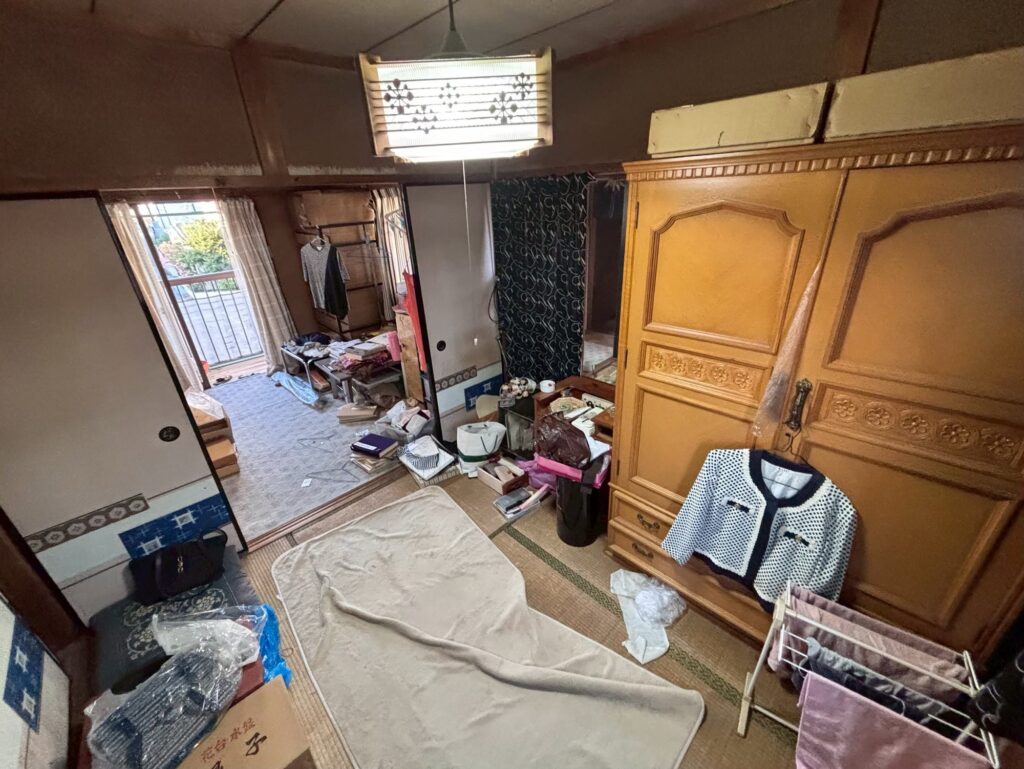
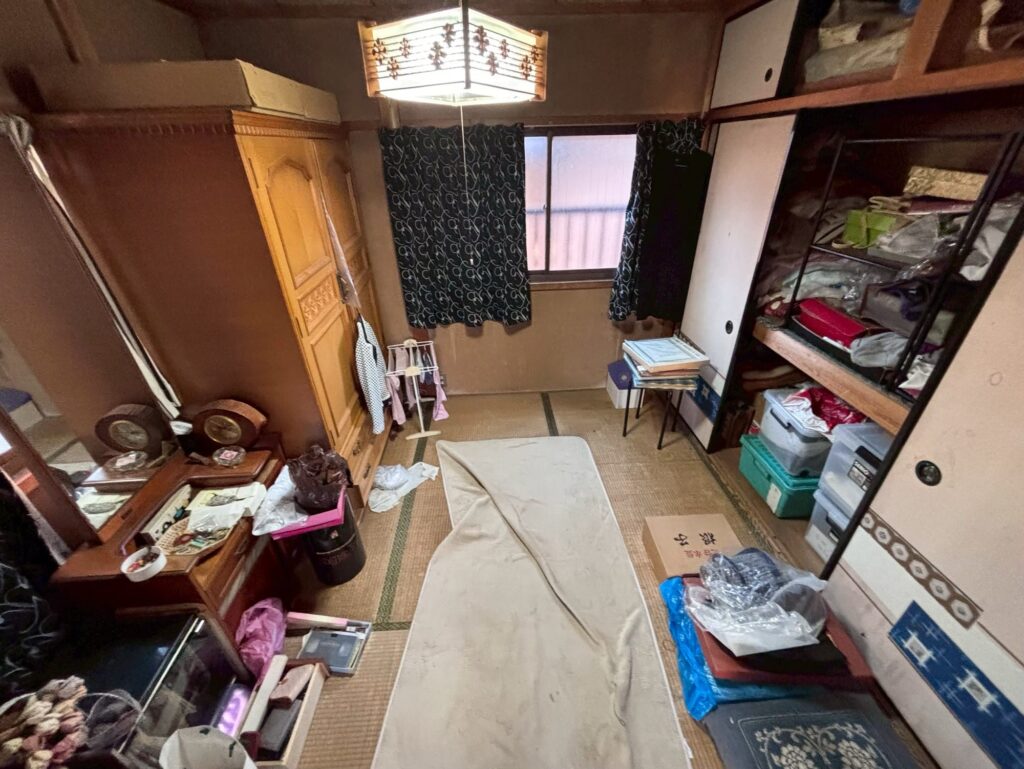
Many vacant houses in Japan are sold with the contents still inside. The previous owner has passed away or moved into care, the family lives far away, and the house is sold as it stands: furniture, clothes, kitchenware, papers, everything. This house was one of those. Every room was full.
Upstairs, bedding was still spread on the tatami, clothes hung from the wardrobe door, and the futon cupboard was packed to the top shelf. The house looked as if someone had only stepped out for the afternoon.
The kitchen was the same: dishes in the drying rack, a rice cooker and a toaster on the counter. On the wall hung a paper charm from Atago Shrine reading hi no yojin, "beware of fire," which you will find in almost every Kyoto kitchen.
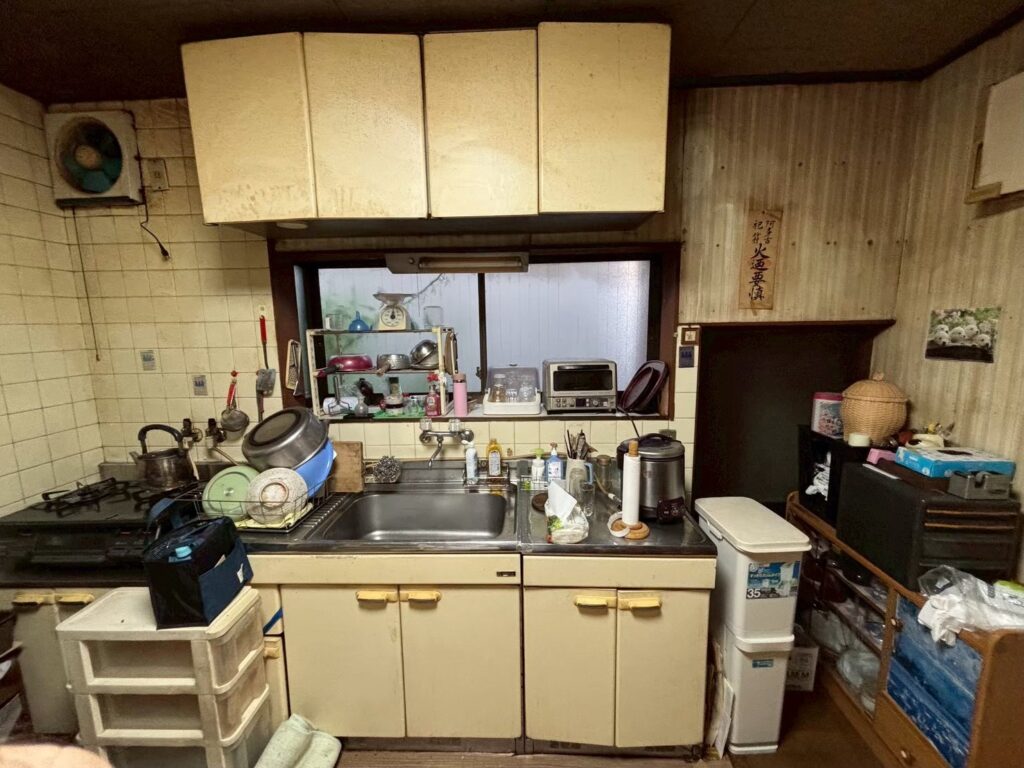
For a buyer this is normal, and it is one reason such houses are cheap. But it means the first cost of the project is not construction at all. It is clearing the house.
2. The First Job: Taking Everything Out
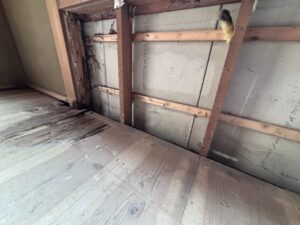
Nothing else can start until the house is empty. A floor cannot be checked while a wardrobe is standing on it, and the walls, the damp and the structure of a room cannot be judged when nobody can walk through it. So the first step of this project, before any building work, was to remove everything from the house: furniture, bedding, clothes, kitchenware, appliances, and whatever was left in the cupboards and storage.
3. How Clearing Works in Japan
In Japan this work is called ihin seiri, literally "sorting the belongings of the deceased," and there are specialist companies for it. They sort what can be recycled or sold, what must go to municipal disposal, and what the family may want to keep. They also handle items that need care: photographs, religious objects, documents.
Typical cost in Kyoto for a two-storey house: ¥250,000 to ¥500,000, depending on how full the house is and how much has to be taken to disposal.
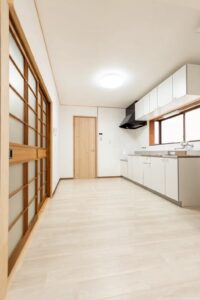
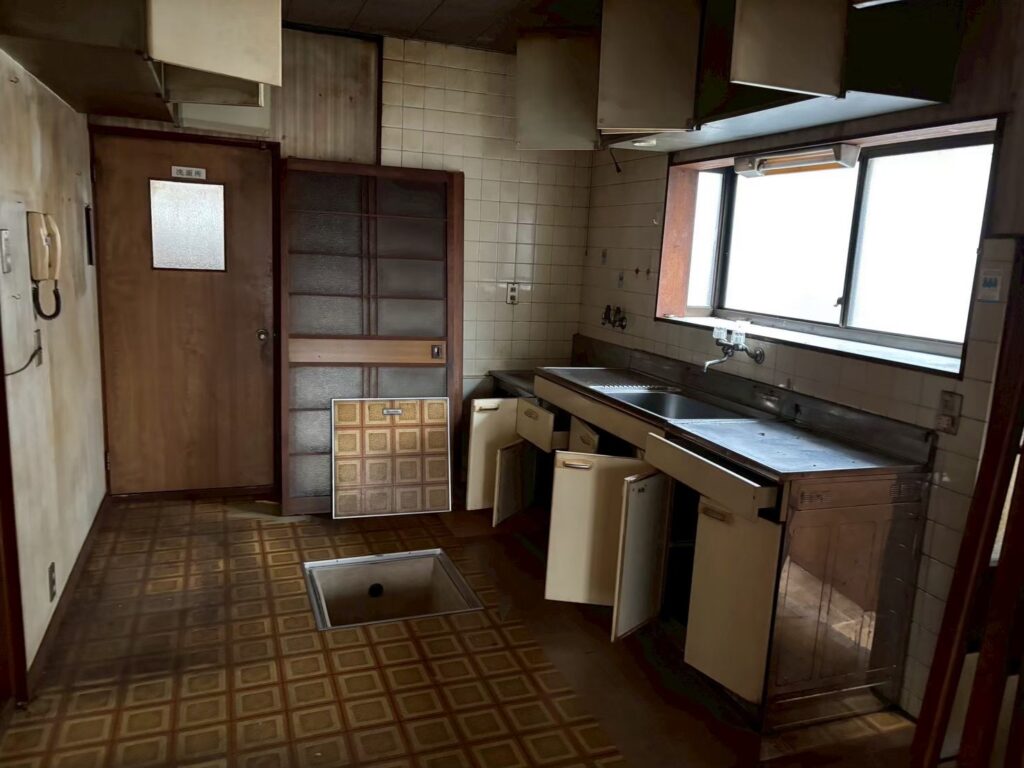
Once the house is empty, it can finally be read. In the kitchen, with every cupboard open and the under-floor storage hatch lifted, we could see the real condition of the cabinets, the floor and the walls for the first time.
4. What This Means for Investors
If you are looking at a cheap vacant house in Kyoto, ask whether it is sold with contents. If it is, add a clearing budget of a few hundred thousand yen before you compare it with an empty house, and expect the renovation to start one to two weeks later than it otherwise would. We arrange the clearing company and are on site when it happens, so the owner does not need to be in Japan for it.
FAQ
Can anything of value be recovered?
Sometimes. Good furniture, tools and appliances in working order can be sold or reused, and some clearing companies offset their fee with what they recover. Do not count on it in the budget.
What about the previous owner's family?
By the time a house is sold with contents, the family has usually taken what they want. Anything personal that turns up during clearing, such as photographs or documents, we set aside and pass back through the agent rather than dispose of.
More From This Project
Read the other stages in the Yamashina Rental House Renovation series. Looking for an investment property in Kyoto? Contact Tsuji House.