Two Small Tatami Rooms Into One Large Bedroom (Yamashina, Part 4)
 tsujikenzai
Location: Yamashina, Kyoto | Work: Combining two upstairs tatami rooms into one Western bedroom | Series: Yamashina Rental House Renovation, Part 4
1. The Rooms Before
Upstairs there were two Japanese rooms of four and a half tatami mats each (about 7 square metres per room), side by side and divided only by sliding fusuma doors. When we first saw them they were still full of the previous owner's belongings (Part 1).
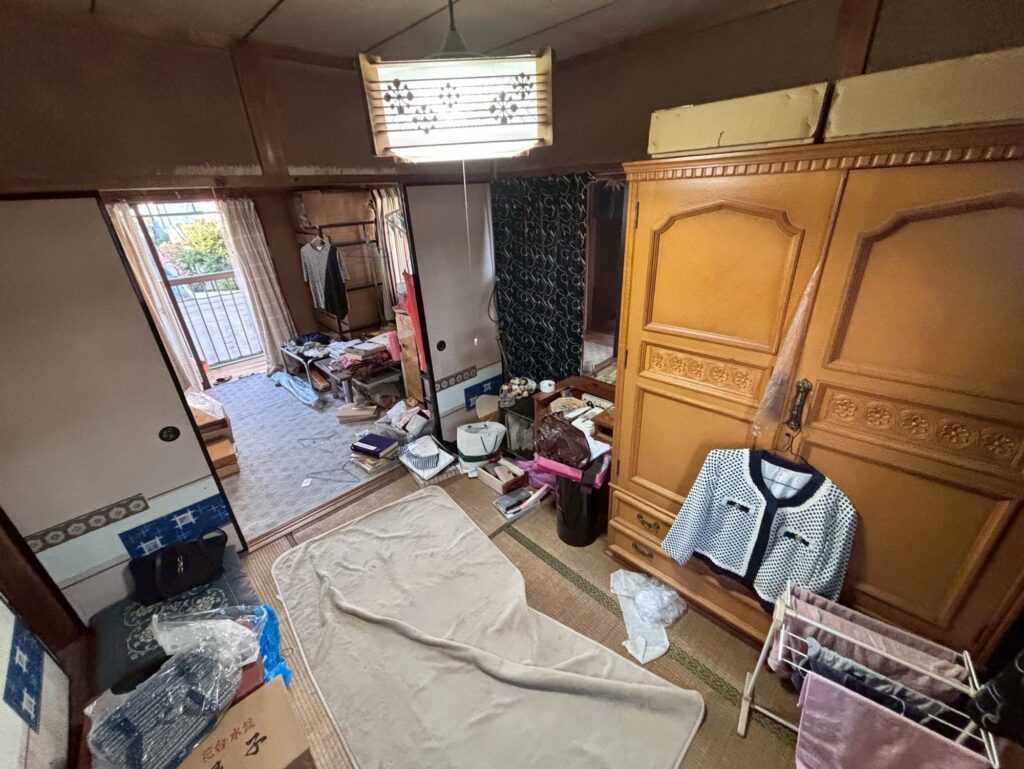
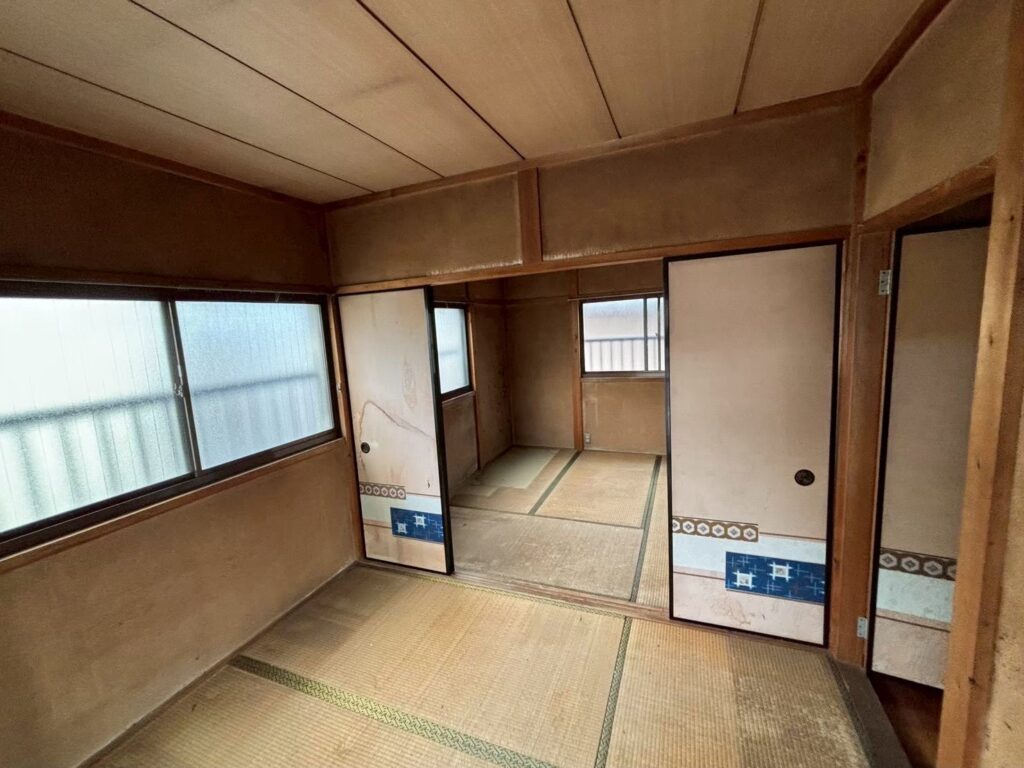
Once cleared, the layout was easy to read: the classic arrangement of a post-war Japanese house, with worn tatami, sand-plaster walls and a board ceiling. It is flexible, but each room is small, and tatami bedrooms are not what most tenants are looking for today.
2. The Decision
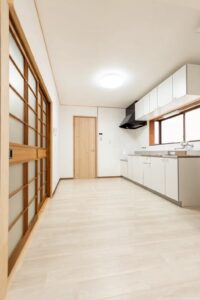
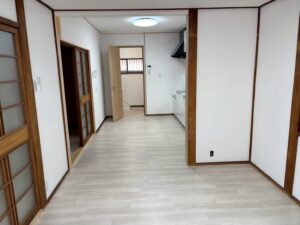
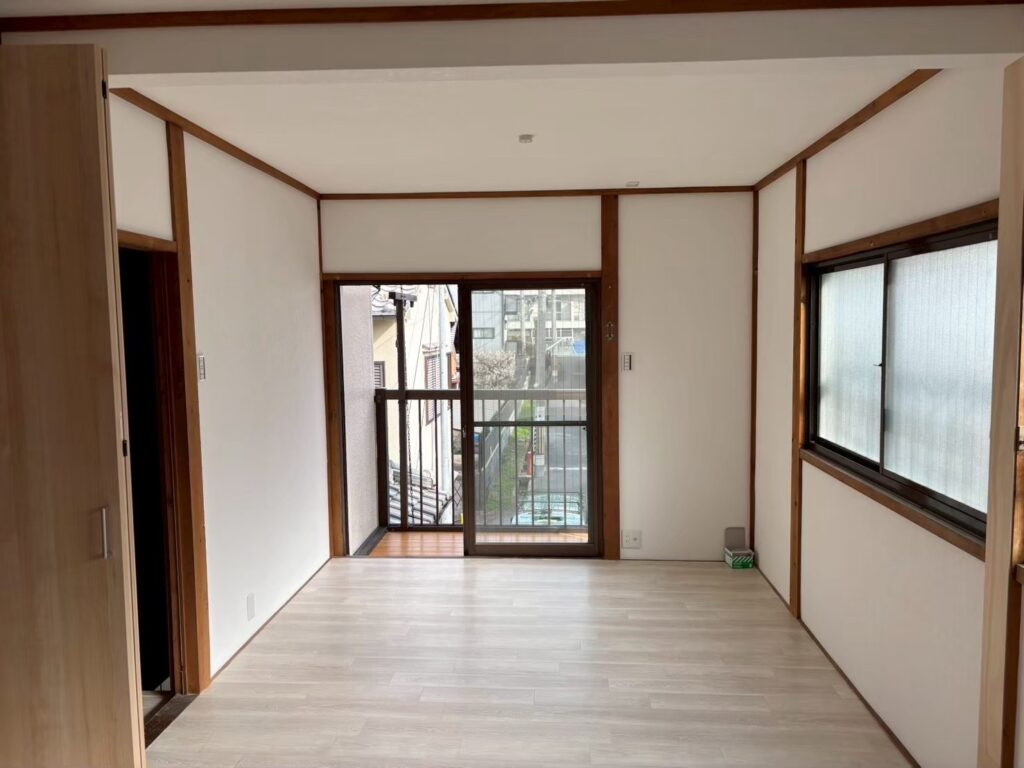
This house is meant for a family, and a family's parents want one proper bedroom, not two cells. So we removed the fusuma and their tracks, took out the tatami, and made the two rooms into one 9-mat Western room, roughly 15 square metres. For a Japanese rental listing, a 9-mat Western bedroom with a full-width closet is a strong line.
3. The Work
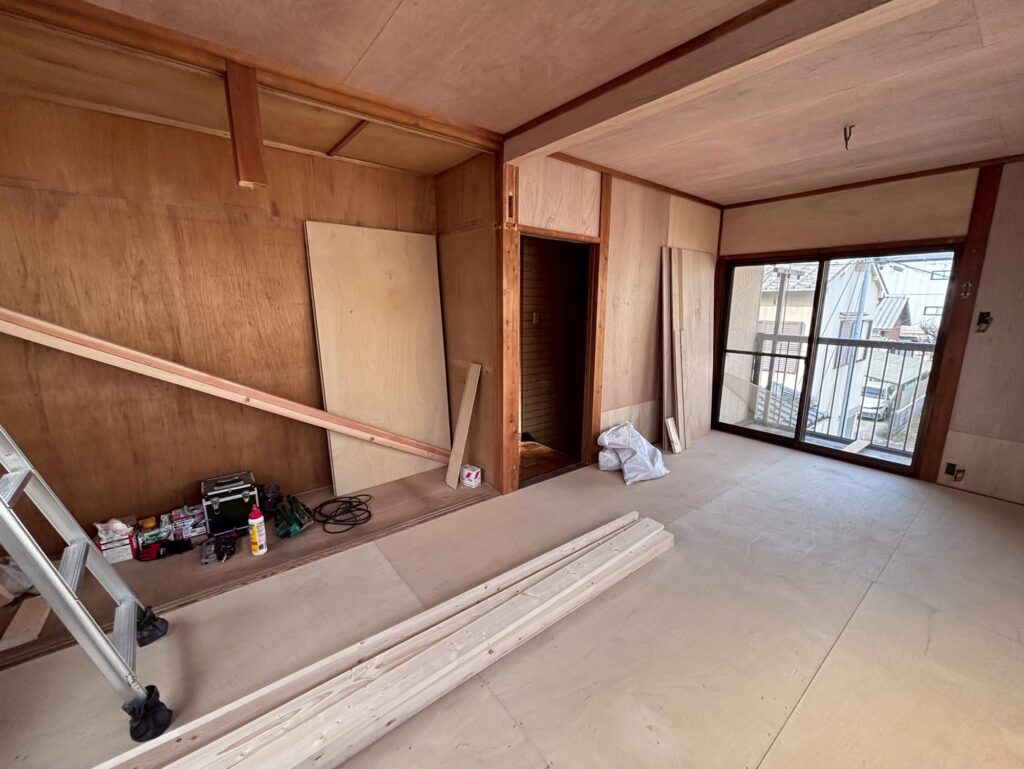
- Removed the fusuma and the sill between the rooms. The beam above the old opening stays, and is the only sign that this was once two rooms.
- Lifted the tatami and laid a new plywood floor across both rooms at one level.
- Fixed thin plywood sheets straight over the old walls, without stripping them, to give the wallpaper a flat, clean base. Then finished in white wallpaper, leaving the wooden posts and rails visible.
- Laid cushion floor (sheet vinyl) in a pale wood-grain pattern over the whole area: inexpensive, flat, easy to clean, and simple to renew between tenants.
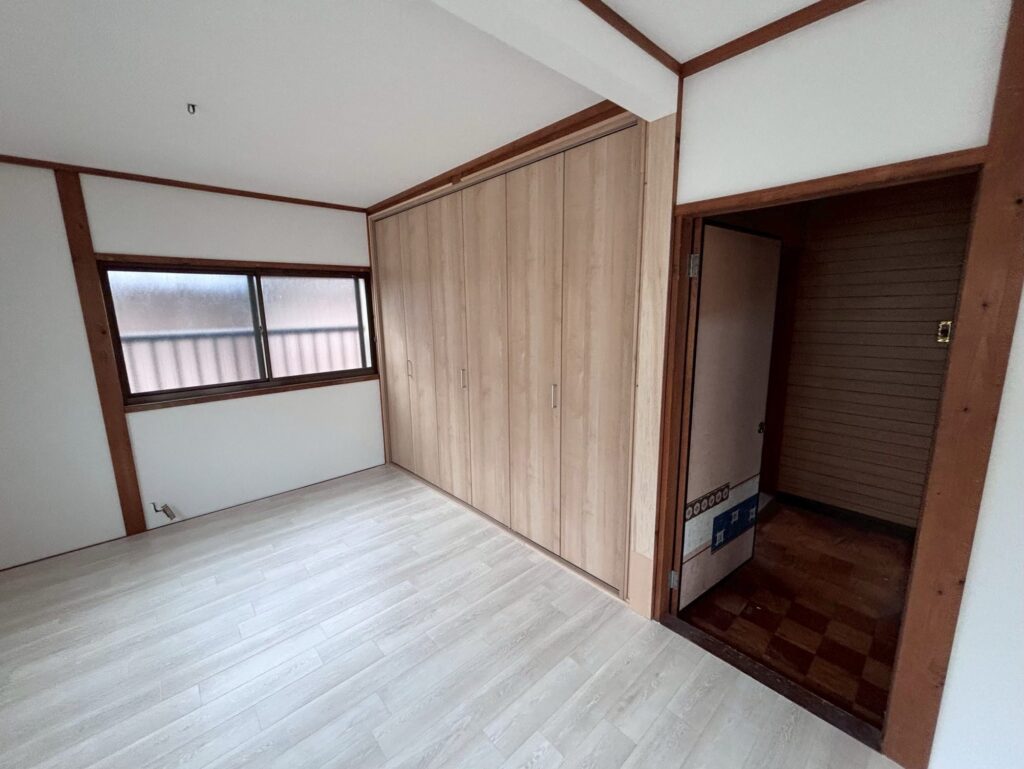
At the other end of the room, the old futon cupboard became a full-width closet with folding doors. That conversion is covered in Part 5.
4. A Note on Tatami in Rentals
Tatami is beautiful and we kept it in the Matsugasaki owner-occupied house. But in a rental, tatami is a liability: it has to be renewed at the landlord's cost when a tenant leaves, and many younger tenants simply do not want it in a bedroom. We kept tatami in two downstairs rooms of this house (Part 8) for character, and removed it where it would hurt the letting.
FAQ
Is removing the wall between two rooms a structural job?
Here, no. The division was sliding doors, not a structural wall, and the posts and the beam stayed where they were. When a real wall is involved we check the structure first.
Why cushion floor and not wood flooring?
Cost and maintenance. In a rental, the floor will be renewed every few tenants. Sheet vinyl is a fraction of the price of wood and takes an afternoon to replace.
More From This Project
Read the other stages in the Yamashina Rental House Renovation series. Contact Tsuji House about a rental renovation in Kyoto.